The Introduction and Amendment of the DSA
The Digital Security Act (DSA) came into effect on 8 October 2018 in the background of criticisms against the Information and Communication Technology (ICT) Act 2006. The ICT Act was promulgated in 2006 but was amended in 2013 which added stringent punitive provisions in Article 57. The law was widely used through 2013 and 2018.
After the abolishment of the caretaker government provision from the constitution in 2011 by the incumbent Bangladesh Awami League (BAL), opposition parties demanded the restoration of the system and threatened to boycott the 2014 election. The 2013 amendment of the ICT Act appears to have been made to address the growing opposition and the use of cyberspace to express discontent against the government and use of the cyberspace to organize opposition activities.
The second context that the DSA encountered was related to the political unrest and the parliamentary elections held in 2018. With the election scheduled in December, the government began the process of formulating a new law in mid-2017. International organizations, including Reporters Without Borders and Human Rights Watch, criticized the DSA, and Amnesty International labeled it as “deeply problematic.” The government’s commitment to amend the act was not fulfilled, leading to disappointment within the journalist community.
As the DSA was being wantonly used as a tool of suppression, OHCHR repeatedly expressed concerns and made specific suggestions regarding the amendment to the DSA. On 31 March 2023, the UN High Commissioner for Human Rights, Volker Türk, urged the Bangladesh government to immediately suspend the enforcement of the Digital Security
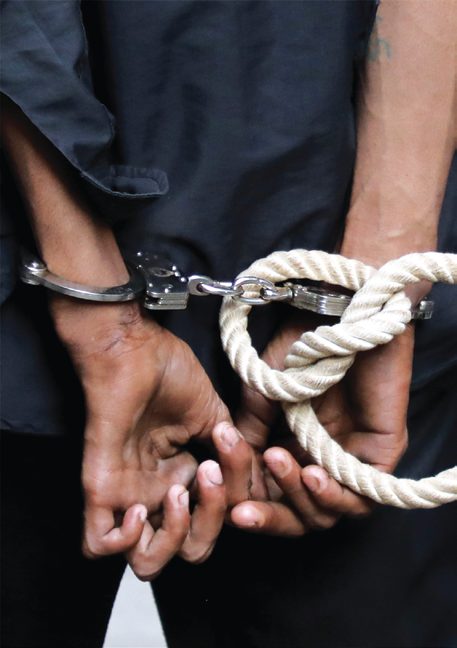
Act, expressing apprehension that the act is being utilized to suppress freedom of expression. His predecessor, Michelle Bachelet, had also voiced similar concerns during her visit to Bangladesh on 17 August 2022 (OHCHR, 2022). The OHCHR recommended the repeal and revision of specific provisions within the act. Although the UN Human Rights office expressed concerns about the vague provisions of the DSA previously, Türk issued this statement following the arrest of Shamsuzzaman Shams, a correspondent for Prothom Alo (A National Daily).
The arrest of Shams was related to his Independence Day report on price hike. Charges were also brought against the Editor, Matiur Rahman, for the same news report. Instances like these are not isolated, as there are numerous cases where individuals have been apprehended and subjected to mistreatment merely for advocating for justice and expressing their opinions.
After years of public protests, the government finally took a step to amend the Digital Security Act (DSA). However, the Editors Council issued a joint statement expressing reservations about the government’s policy decision to repeal the DSA (Prothom Alo 2023). The statement emphasized that the concerns raised by participants over an extended period have now been validated. It was also highlighted in the statement that during the transition from the Information and Communication Technology (ICT) Act to the DSA, the government did not consider the opinions of stakeholders. This pattern repeated with the DSA transforming into the Cyber Security Act (CSA). Critics-from the editorial board, journalists, and intellectual circles-have collectively referred to the CSA as “old wine in a new bottle.”
OHCHR repeatedly expressed its concerns and made specific suggestions regarding the amendment to the DSA. On 31 March 2023, the UN High Commissioner for Human Rights, Volker Türk, urged the Bangladesh government to immediately suspend the enforcement of the Digital Security Act, expressing apprehension that the act is being utilized to suppress freedom of expression.
The basis for this criticism lies with the fact that a few sections of the DSA, namely 17, 21, 22, 25, 26, 28, 29, 30, 31, 32, and 40, have been altered, with section 33 being abolished. Consequently, section 34 of the DSA became section 33 of the CSA, and section 40 became section 39. Sections 17, 19, 21, 22, 23, 24, 26, 27, 28, 30, 31, 32, 33, and 34 were non-bailable under the DSA, where under the CSA every section has been made bailable except for the section 17, 19, 27 and 32. Additionally, in various sections, the punishment for a second offense was either doubled or increased under the DSA, but such provisions have been eliminated in the new CSA law.
Despite these changes, the highly criticized section 42 (previously section 43 in the DSA), granting the police unquestionable power to arrest individuals without a warrant, remains unchanged. This situation reinforces the public sentiment that the CSA is merely a repackaging of the old DSA.