
Germany’s Far-Right Challenge: The AfD’s Rise and the Future of Europe

Nuzhat Tabassum
Program Assistant, Centre for Governance Studies (CGS)
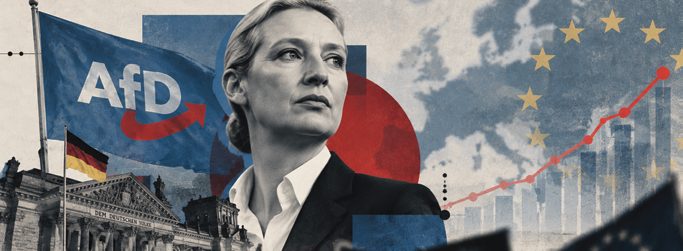
Abstract: The AfD’s growing electoral strength is reshaping Germany’s political landscape and testing the country’s established approach to containing the far right. Its rise intersects with public distrust, migration, labour shortages, coalition pressures, and competing visions of Germany’s role in Europe. The developments in Saxony-Anhalt carry wider implications for democratic stabil-ity, European cohesion, and future political alignments.
With over 44 percent of the vote, the far-right Alternative for Germany (AfD) won the regional election in Saxony-Anhalt on September 6, more than doubling its 20.8 percent performance in 2021. It has become the main opposition party in Germany. It is projected to secure 39 of 83 seats in the state parliament in Magdeburg, three fewer than the 42 required for an absolute majority. The incumbent Christian Democratic Union of Germany (CDU), led nationally by Chancellor Friedrich Merz, scored less than half, only 17 percent. AfD lead candidate Ulrich Siegmund has called other parties to cooperate with AfD to be a part of fundamental political shift even though he previously stated that he wants to govern alone.1 Germany’s mainstream political parties have taken the firewall strategy to counter AfD. They have refused to work with the AfD. In areas, such as Saxony-Anhalt, domestic intelligence services consider the AfD to be radical, making cooperation particularly delicate in light of Germany’s Nazi background. As the AfD has become the main opposition party, the firewall has already produced odd partnerships, such as the three-party coalition in charge of Thuringia.2 Excluding the AfD in Saxony-Anhalt would require the CDU, Social Democratic Party of Germany (SPD), Greens, Left Party and Bündnis Sahra Wagenknecht (BSW) to govern together. It will require them to establish a five-party coalition party. However, it will be unusual, complicated and unstable. The AfD, if they want to win, they might have to make a coalition with another party. Even though firewall strategy exists, the only party they can govern with is the BSW, which won 5.3 percent of the vote. Both parties differ in various issues but share certain similarities like a Russia-friendly stance and opposition to immigration.3 The BSW has alluded to tacit cooperation even while other parties have ruled out publicly supporting an AfD-led government.4 Across Europe, old democratic parties are losing their popularity as they try to make unstable coalitions just to exclude the far-right parties from gaining strength. Such a step is rather increasing dissatisfaction among the public and making way for the far-right to win public support.5 The AfD has been entangled in controversies since its foundation in 2013, including claims of foreign espionage connections, covert deportation plots, and internal nepotism, with some Saxony-Anhalt lawmakers allegedly hiring family members. After lead candidate Maximilian Krah stated that not all members of the Nazi SS were criminals, it was expelled from the far-right Identity & Democracy group of the European Parliament in 2024. He was also investigated by German prosecutors regarding alleged illegal payments, bribery and money laundering linked to China and Russia. For attending a covert discussion on preparations for mass deportations of individuals with immigrant backgrounds, some AfD members also attracted criticism.6 In the AfD’s Saxony-Anhalt program, the party has stated that Islam belongs neither to Germany nor to Saxony-Anhalt. In addition to proposing to oppose the call to prayer, restrict mosque construction, stop Islamic religious instruction in schools, and replace university chairs in Islamic theology with non-confessional Islamic studies, it makes a distinction between Muslims it considers to be accepting of the constitutional order and those it labels political Islam.7 Though some of these proposals are contrary to the German constitution such as religious freedom. AfD has promised a remigration and deportation offensive, in which they consider migrant people unwanted, and a ban on rainbow flags in schools.8 AfD’s manifesto pledges to abolish asylum on safe-third-country grounds, deny residency to foreigners with criminal records, stop treating Ukrainians as war refugees and, abolish church asylum, make recognized refugees work in waste disposal, review acquired citizenships, and use prisons to hold individuals designated for deportation.9
“AfD’s rise might increase mistrust from France and Poland, and that a weaker coalition might force Germany to return to focusing on trade with China instead of adopting a more hawkish
divided Germany. According to the European Council on Foreign Relations, this might lead Europe toward fragmentation and exploitation.12 Many European far-right parties, including France’s National Rally, oppose energy-transition policies and renewable expansion, and that AfD’s anti-EU, pro-Russia positioning has pushed nationalist framing, “what’s in it for us, the Germans?” into mainstream discourse.13 Like minded parties in Europe share anti-immigration platforms and strong nationalist messages, which is what worries the EU as election season approaches in France, Italy, Spain and Poland.14 The AfD’s success in Saxony-Anhalt is a test of Germany’s democratic system, which has existed since reunification to keep the extreme right out of power. So far the firewall has been held, but each election that forces the major parties into larger and more uncomfortable coalitions makes that tactic harder to sustain and more likely to be painted as an insult to democratic choice. Whether the CDU, SPD, Greens, Left and BSW can keep a five-party government together or whether a quieter deal with the AfD eventually emerges, the underlying pressures will not go away: labor shortages, migration issues and public distrust of the established parties. A divided and inward-looking Germany matters for EU policy on China, trade and Ukraine, and offers a model that far-right movements elsewhere in Europe might follow as their own elections approach. The result in Magdeburg will be watched very closely far beyond Saxony-Anhalt.
Endnotes
migrants-fear-afd-state-election-victory-immigrant-voters-areturning-away-from-politics 11 https://www.steptoe.com/en/news-publications/stepwise-riskoutlook/the-afds-victory-in-saxony-anhalt-and-the-outlookfor-german-politics-trade-and-economic-policy.html 12 https://www.epc.eu/publication/how-german-state-electionscan-shift-eu-politics/ 13 https://www.cleanenergywire.org/factsheets/qa-what-does-far -right-state-election-win-mean-germanys-energy-transition 14 https://www.bbc.com/news/articles/c986w38r4j5o
Notes
- https://www.france24.com/en/europe/20260907-how-far-right -breakthrough-may-cause-absolute-chaos-in-germany-afd ↩
- https://fortune.com/2026/09/07/germany-firewall-afd-saxonyanhalt-far-right/ ↩
- https://fortune.com/2026/09/07/germany-firewall-afd-saxonyanhalt-far-right/ ↩
- https://www.theguardian.com/world/2026/sep/07/why-farright-afd-state-victory-significant-german-politics-germanyexplainer ↩
- https://www.theguardian.com/commentisfree/2026/sep/07/ afd-win-germany-far-right-europe-democracy ↩
- https://www.aljazeera.com/news/2026/9/7/germanys-afdwins-in-key-state-is-far-right-on-cusp-of-national-rule ↩
- https://www.newarab.com/news/what-saxony-anhalt-afdvictory-means-germanys-minorities ↩
- https://www.theguardian.com/world/2026/sep/07/why-farright-afd-state-victory-significant-german-politics-germanyexplainer ↩
- https://www.infomigrants.net/en/post/73396/germany-asmigrants-fear-afd-state-election-victory-immigrant-voters-are -turning-away-from-politics ↩
- https://www.infomigrants.net/en/post/73396/germany-as-