
When Extremism Becomes Useful: The Politics of Identity in South Asia

Sharaf Anjum Prova
Research Assistant,Centre for Governance Studies (CGS)
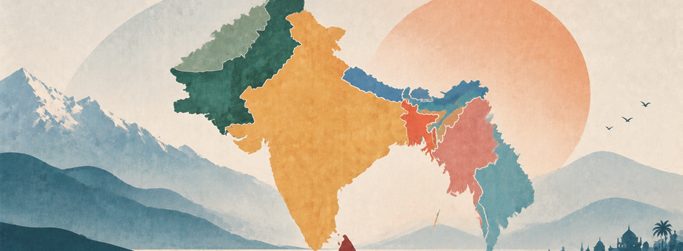
Abstract: Extremism in South Asia survives not only through ideology, but also because identity, fear and exclusion can become politically useful. Across India, Pakistan, Afghanistan, Bangladesh, Sri Lanka and Myanmar, different forms of extremism reveal how political actors mobilise perceived threats to consolidate authority. Countering extremism therefore requires accountability, impartial institutions and protection of minorities.
Extremism in South Asia is neither a new phenomenon nor limited to religious radicalization or communal violence; it also includes political polarization, ethnic nationalism, separatist movements and hate campaign. Sometimes it is the state itself that practices fanaticism and sometimes it is a random social media post that ignites riots. Over time, governments across the region have taken security measures, conducted operations against violent groups, imposed restrictions on extremist organizations and imposed various legal and policy responses. While these measures have had varying degree of relevance and effectiveness, a fundamental question remains: why does extremism continue to survive, adapt and reappear across South Asia despite decades of institutional intervention and political changes? One answer is that extremism can become politically useful. Across South Asia, extremist ideas do not survive only because individuals believe in them. Political actors, social organizations and state institutions have drawn on identity, fear and exclusion to mobilize supporters, legitimize authority, frame groups as security threats, redirect public anger or consolidate power. Hindu majoritarianism in India, Taliban rule in Afghanistan, militancy in Pakistan, Buddhist nationalism in Sri Lanka and Myanmar, and the intersection of religious identity and mobilization in Bangladesh are products of distinct political histories and ideological traditions; yet they demonstrate a recurring pattern where identity becomes a political tool. India is perhaps the clearest example of how religious identity can become electorally powerful. The Ram Janmabhoomi Movement and the demolition of Babri Masjid in 1992 helped convert religious polarization into electoral support. Under Narendra Modi, Hindu nationalism has increasingly been institutionalized through measures such as the 2019 revocation of Jammu and Kashmir’s special constitutional status, the Citizenship Amendment Act (CAA), proposed National Register of Citizens (NRC), anti-conversion and cow protection laws.1 This political climate has also enabled violence: three Muslim men were killed amid tensions over a Mughal-era mosque survey in Uttar Pradesh in 2024,2 while a Muslim teenager, Sabbir Malik, was beaten to death in Haryana after being accused of carrying beef.3 In 2025, the India Persecution Tracker documented at least 27 Muslims killed by Hindu extremists in religiously motivated hate crimes and another 23 Muslims killed by state actors.4 Muslims are increasingly portrayed as threats to national identity and security, while issues such as cow protection, religious conversion and alleged illegal migration can be used to consolidate majoritarian support. Christian communities have also faced mob attacks amid accusations of forced conversion.5 When polarizing religious rhetoric can strengthen political solidarity among a majority community, the incentive to abandon it weakens. Pakistan demonstrates a different relationship between extremism and political utility. Religious extremism operates through militant organizations, sectarian networks, discriminatory laws, social pressure and mob violence. The Tehreek-e-Taliban Pakistan and other militant groups have attacked civilians and state institutions, while blasphemy accusations have triggered vigilante violence against minorities.6 Pakistan’s blasphemy laws have also been exploited for personal vendetta, property disputes and other forms of coercion.7 Once religious rhetoric becomes embedded in law, public institutions and social expectations, actors can invoke it to pressure governments, silence opponents or establish their own legitimacy. The state may fight militant groups while operating within a political environment in which religious actors possess substantial influence. Afghanistan demonstrates an even more extreme transformation where the state itself has become an extremist movement. Since returning to power in 2021, the Taliban has made its interpretation of Islam a governing framework. Girls are barred from secondary and higher education, women are excluded from most forms of employment and restrictions on mobility and public participation have become institutionalized.8 The Soviet invasion, US, Pakistani and Saudi support for the Afghan jihad, the militarization of Afghan politics, civil war, Taliban’s emergence and the subsequent US-led war all contributed to the political environment in which militant Islam developed.9 External intervention did not create Taliban ideology or excuse the movement’s present policies, but it demonstrates how extremism develops within environments shaped by domestic and international power politics. Bangladesh presents a distinct variation in which religious mobilization intersects with electoral competition, political rivalry and communal tensions. The killing of Dipu Chandra Das following allegations concerning religious sentiment and the December 2025 attacks on Prothom Alo and The Daily Star illustrate the visibility of organized mob violence.10 The attacks were preceded by online incitement, showing how social media can turn religious and political tensions into collective violence.11 Groups mobilized under the banner of ‘Tawhidi Janata’ also reflect a mob culture where religious sentiment is used to justify intimidation and brutality.
“Until the political incentives that make extremism useful are confronted, defeating extremist organizations will not be enough to defeat extremism itself.”
At the same time, religious violence cannot always be separated from political conflict. A 2025 UK Home Office assessment, drawing on Bangladesh Police data, found that many attacks on minorities after the fall of the Awami League regime were politically motivated rather than communal.12 This overlap shows how religious identity can be politically instrumentalized, making minorities vulnerable because of faith and political affiliation. Its persistence points to political incentives, weak accountability and the normalization of mob violence. Sri Lanka provides another example of how religious nationalism can become politically useful. Buddhist nationalist organizations such as the Bodu Bala Sena have portrayed Muslims as a threat to Sinhala-Buddhist identity, culture and economic interests. Rumors about demographic and economic threats have generated hostility and a ‘moral panic’ around a perceived religious and cultural threat.13 The historical roots are deeper than any single organization, as Sinhala Buddhist nationalism and Muslim identity have developed through a century of political and socioeconomic competition.14 Myanmar demonstrates the most devastating consequences of this process. Buddhist nationalism and ethnic exclusion contributed to the construction of the idea that the Rohingya are outsiders to the national community. They were portrayed not simply as a religious minority but as a demographic, cultural and national threat.15 Recent United Nations reporting continues to document severe abuses against the Rohingya and other minorities in Myanmar.16 These cases should not be placed into one category. TTP terrorism is not the same as Hindutva politics; Taliban rule is not equivalent to Buddhist nationalism; and mob violence in Bangladesh cannot simply be equated with systematic persecution of the Rohingya in Myanmar. Their origins, institutional structures and degrees of violence differ considerably. What connects them is a political mechanism rather than a common ideology: identity can become a resource for acquiring or maintaining power. Extremism becomes particularly useful when it provides an enemy. Minorities, migrants or political rivals can be portrayed as threats, turning complex problems into emotionally powerful narratives. This also explains why extremism can survive the defeat or fall of extremist organizations: narratives remain embedded in people’s minds, allowing ideology to outlive the organization itself. Social media has intensified this process. It has not created the underlying politics, but it has accelerated the mobilization of fear. The medium has changed, but the mechanism remains familiar: identify a threat, construct an enemy, mobilize a community and turn fear into collective action. The deeper problem is not simply the existence of extremist beliefs, but the political environment that rewards mobilization. When politicians gain support by portraying minorities as threats, religious organizations gain influence by claiming to defend faith, or governments tolerate extremist actors for political convenience or because of weak law enforcement, extremism becomes self-reinforcing. This is why counterterrorism alone cannot defeat extremism. Stronger institutions, impartial law enforcement, independent courts, minority protection and accountability are necessary to make political violence and religious hatred costly rather than rewarding. The ideologies and targets may differ across South Asia, but the pattern remains similar. Until the incentives that make extremism useful are confronted, defeating extremist organizations will not be enough to defeat extremism itself. It will continue to recur in society, taking different forms and affecting people, states and the wider region.
Endnotes
5 Deutsche Welle. (2026, May 8). Christians decry persecution in India’s heartland. https://www.dw.com/en/christians-decry-persecution-inindias-heartland/a-77095929 6 Human Rights Watch. (2026). World report 2026: Pakistan. https://www.hrw.org/world-report/2026/country-chapters/ pakistan 7 Human Rights Watch. (2025, June 9). “A conspiracy to grab the land”: Exploiting Pakistan’s blasphemy laws for blackmail and profit. https://www.hrw.org/report/2025/06/09/conspiracy-grab-land/exploiting-pakistans-blasphemy-laws-blackmail-and-profit 8 UN Women. (2025, August 11). State of women’s rights in Afghanistan. https://www.unwomen.org/en/articles/in-focus/afghanistan 9 Coll, S. (2004). Ghost wars: The secret history of the CIA, Afghanistan, and bin Laden, from the Soviet invasion to September 10, 2001. Penguin Press. 10 Committee to Protect Journalists et al. (2025, December 22). Joint statement on attacks on freedom of expression and democratic participation in Bangladesh. https://cpj.org/wp-content/uploads/2025/12/12_22-Joint- Statement-on-Attacks-on-Freedom-of-Expression-and- Democratic-Participation-in-Bangladesh.pdf 11 The Daily Star & Dismislab. (2026, February 24). Mob attacks on Star, Prothom Alo scripted: Star-Dismislab analysis. https://www.thedailystar.net/news/investigative-stories/news/mob-attacks-star-prothom-alo-scripted-4113416 12 UK Home Office. (2025, June). Country policy and information note: Religious minorities and atheists, Bangladesh. Government of the United Kingdom. https://www.gov.uk/government/publications/bangladeshcountry-policy-and-information-notes/country-policy-andinformation-note-religious-minorities-and-atheists-bangladesh -june-2025 13 Silva, K. T. (2016). Gossip, rumor, and propaganda in anti-Muslim campaigns of the Bodu Bala Sena. In J. C. Holt (Ed.), Buddhist extremists and Muslim minorities: Religious conflict in contemporary Sri Lanka (pp. 119–139). Oxford University Press. https://academic.oup.com/book/4557/chapter-abstract/ 146655451 14 Nuhman, M. A. (2016). Sinhala Buddhist nationalism and
Notes
- Nielsen, K. B., & Nilsen, A. G. (2021). Hindu nationalist statecraft and Modi’s authoritarian populism. In S. Widmalm (Ed.), Routledge handbook of autocratization in South Asia (pp. 92–100). Routledge. https://www.taylorfrancis.com/chapters/oa-edit/10.4324/9781003042211-10/hindu-nationalist-statecraft-modi-authoritarian -populism-kenneth-bo-nielsen-alf-gunvald-nilsen ↩
- Al Jazeera. (2024, November 25). Arrests after Muslims killed in mosque survey violence in India’s Sambhal. https://www.aljazeera.com/news/2024/11/25/arrests-aftermuslims-killed-in-mosque-survey-violence-in-indias-sambhal ↩
- East Asia Forum. (2025, March 6). India’s double standards on minority rights. https://eastasiaforum.org/2025/03/06/indias-double-standards-on-minority-rights/ ↩
- South Asia Justice Campaign. (2025). India Persecution Tracker 2025: Annual overview. https://southasiajusticecampaign.org/ipt2025/ Muslim identity in Sri Lanka: One hundred years of conflict and coexistence. In J. C. Holt (Ed.), Buddhist extremists and Muslim minorities: Religious conflict in contemporary Sri Lanka (pp. 18–53). Oxford University Press. https://academic.oup.com/book/4557/chapter-abstract/ 146650643 ↩
- Schonthal, B. (2016). Making the Muslim other in Myanmar and Sri Lanka. In M. Crouch (Ed.), Islam and the state in Myanmar: Muslim-Buddhist relations and the politics of belonging (pp. 234–257). Oxford University Press. https://academic.oup.com/book/11127/chapter-abstract/159568821 ↩
- Office of the United Nations High Commissioner for Human Rights. (2026, August 25). Situation of human rights of Rohingya Muslims and other minorities in Myanmar. https://bangkok.ohchr.org/reports/situation-human-rights-rohingya-muslims-and-other-minorities-myanmar-1 17 ↩