
Constitutional Bodies
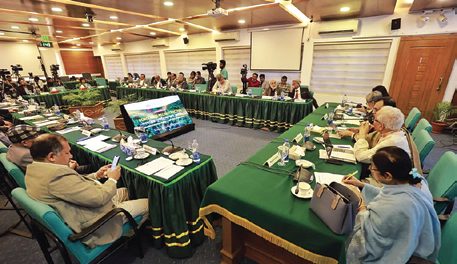
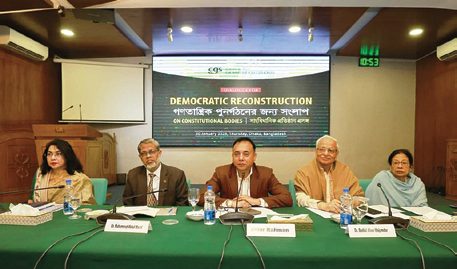
As part of the Centre for Governance Studies (CGS) series of policy dialogues on priority reform areas for the interim government, a discussion on constitutional bodies was held on January 30, 2025, at the Bangladesh Institute of International and Strategic Studies (BIISS) auditorium in Dhaka. This discussion highlighted critical flaws within these institutions and proposed reforms to restore their autonomy, efficiency, and accountability.
Lack of Transparency and Accountability in Administration
Participants in the dialogue raised concerns about the absence of transparency and accountability in Bangladesh’s administrative system. Many discussants argued that political interference in government institutions has led to widespread corruption, nepotism, and inefficiency. Several participants pointed out that the recruitment process for public officials has been compromised by political favoritism, resulting in the appointment of unqualified individuals. Many also noted that the lack of transparency in decision-making has fueled public dissatisfaction and increased opportunities for misconduct.
To address these issues, some participants proposed introducing a neutral and transparent recruitment process. Many argued that a separate independent commission should oversee the appointment of civil servants and judges, ensuring that selections are merit-based and conducted through an impartial examination process. Several discussants emphasized that all constitutional bodies must be free from political influence, with their personnel appointments overseen by an independent committee.
To enhance administrative transparency, participants suggested introducing a digital tracking system for government operations to minimize corruption. Many also called for an independent audit committee to conduct regular assessments of government activities, while some proposed the establishment of a separate investigative body to handle complaints against public officials.
Ensuring the Independence and Effectiveness of the Election Commission
Participants emphasized that although the Election Commission is a vital constitutional institution, its neutrality and effectiveness have been widely questioned, particularly after recent elections. Several discussants noted that the appointment of election commissioners is currently controlled by political parties, which they argued undermines the commission’s ability to function independently. Many also pointed to concerns about the partiality of law enforcement and administrative bodies during elections, further eroding public trust.
To safeguard the commission’s autonomy, some participants proposed that a judicial-led selection committee should be responsible for appointing election commissioners. Others suggested that the commission’s budget and administrative operations must be independent to prevent external influence over its decisions. Several discussants emphasized the need for a fixed term of office for election commissioners, with reappointment based on expertise and experience rather than political considerations.
A transparent electoral system,
participants argued, requires strict measures against vote-rigging and election fraud. Many proposed that the Election Commission must have full control over the administration during elections, ensuring that law enforcement agencies remain neutral. Some suggested that deploying military personnel and independent observers during elections could enhance credibility and fairness.
Judicial Independence and Reform
Participants strongly emphasized that judicial independence is a prerequisite for democracy and justice, yet Bangladesh’s judiciary has become highly politicized. Several discussants noted that the appointment and promotion of judges are often influenced by political considerations, undermining their ability to function independently. Some also pointed out that the judiciary lacks decision-making power in administrative matters, further restricting its role in ensuring justice.
To resolve these issues, participants recommended the establishment of a separate Judicial Secretariat to oversee judicial operations. Many proposed that the appointment and promotion of judges should be conducted by an independent Judicial Commission. Several discussants stressed that the judiciary must be provided with autonomous administrative structures and a dedicated budget to function without executive interference.
To enhance transparency, some participants suggested encouraging open court proceedings and streamlining judicial processes. Others argued that ensuring judicial security and freedom from political pressure is essential for an effective justice system. Many discussants also proposed establishing an independent investigative body within the judiciary to help combat corruption and irregularities in the legal system.
Reforming the Public Service Commission and Recruitment System
Participants expressed deep concerns about the failure of the Bangladesh Public Service Commission (PSC) to uphold transparency in government recruitment. Many discussants cited allegations of political influence, exam paper leaks, and corruption, which they argued have tainted the credibility of the PSC. Several participants noted that as a result, unqualified individuals have been appointed to key positions, while a shortage of skilled and professional personnel has weakened the civil service.
To reform the recruitment process, some participants proposed that all government job examinations must be merit-based, with strict measures against question leaks and corruption. Many suggested establishing a separate oversight committee to monitor the recruitment process and prevent political interference. Several discussants also called for the enactment of stringent anti-corruption laws to ensure fair and transparent hiring practices.
To enhance administrative efficiency, some participants recommended introducing mandatory skill development programs for civil servants. Others emphasized that performance evaluations should be based on objective criteria, and a neutral examination and monitoring system should be implemented to ensure fairness.
Misuse and Ineffectiveness of the Anti-Corruption Commission
Participants criticized the Anti-Corruption Commission (ACC) for failing to act effectively in combating corruption. Several discussants pointed out that instead of taking firm action against corruption, the ACC has often been used as a political weapon, where opposition figures face rigorous investigations while government allies enjoy immunity. Many participants noted that despite having the authority to investigate high-ranking officials, the ACC has been largely ineffective due to political influence and bureaucratic obstacles.
To address these concerns, some participants proposed that the organizational structure and operational framework of the ACC must be overhauled to ensure that it functions as a genuinely independent body. Many suggested that the appointment process for ACC members should be transparent, with an independent selection committee overseeing recruitment to prevent political interference. Several discussants recommended the creation of a separate ACC cadre, where investigators are trained and serve exclusively within the commission to build long-term expertise.
Participants also emphasized that the ACC must be provided with financial and administrative independence, freeing it from executive control. Many called for the introduction of an open complaint and investigation tracking system, allowing citizens to monitor the progress of corruption cases. Some discussants proposed establishing a special anti-corruption tribunal to ensure that corruption-related trials are conducted efficiently and fairly.
Financial Independence and Sustainability of Constitutional Bodies
Participants raised concerns that many constitutional bodies remain financially dependent on the government, limiting their ability to operate independently. Several discussants noted that because these institutions rely on government funding, their decisions and activities are often influenced by political pressures. Many argued that the Comptroller and Auditor General’s office should play a stronger role in ensuring financial oversight.
To safeguard the independence of constitutional bodies, some participants proposed the establishment of a constitutionally mandated budget allocation system. Several discussants emphasized that these institutions
should receive fixed funding directly from the national budget rather than relying on discretionary allocations from the executive branch. Many participants also suggested forming an independent financial oversight committee to ensure transparent budget management for each institution.
The dialogue was moderated by CGS’s Executive Director, Zillur Rahman, and featured several distinguished speakers. The speakers were;
- Dr. Badiul Alam Majumdar, Head of the Electoral System Reform Commission and Secretary of SHUJAN (Citizen for Good Governance)
- Dr. Muhammad Abdul Mazid, Former Chairman, National Board of Revenue
- Ambassador M. Shafiullah, Retired Diplomat
- Dr. Fahmida Khatun, Economist, Executive Director, Centre for Policy Dialogue
- Munira Khan, Chair, Centre for Governance Studies (CGS)
- Zahir Uddin Swapon, Adviser to the Bangladesh Nationalist Party (BNP) Chairperson
- Ikteder Ahmed, Former District Judge
- Abdul Haque, Founding President, Bangladesh Reconditioned Vehicles Importers and Dealers Association (BARVIDA)
- Advocate Subrata Chowdhury, Executive President at Gono Forum
- Barrister Shihab Uddin Khan, Advocate, Supreme Court of Bangladesh
- Dr. Nazmul Ahsan Kalimullah, Professor, Department of Public Administration, University of Dhaka
- Dr. Zahed Ur Rahman, Political analyst and Adjunct Faculty Member at Independent University, Bangladesh
- Parvez Karim Abbasi, Assistant Professor, Dept. of Economics, East West University
- Masood Kamal, Senior Journalist
- Abu Saeed Khan, Senior Journalist
- M. A. Aziz, Senior Journalist
- Sohrab Hassan, Senior Journalist, Joint Editor, Prothom Alo
- Mojibur Rahman Manju, Chairman, AB Party
- Zonayed Saki, Coordinator of Ganosamhati Andolon Bangladesh
- K. S. Mong, Member, Chittagong Hill Tracts Regional Council
- Munmun Mahjabin, Student Representative, University of Dhaka
- Muhammad Khalid Khan, Student Representative, University of Dhaka