

Civil Administration
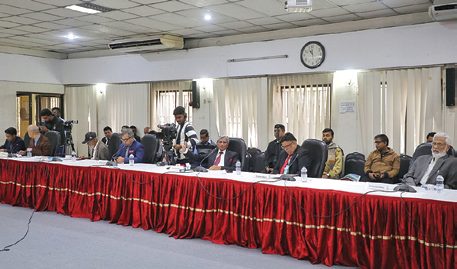
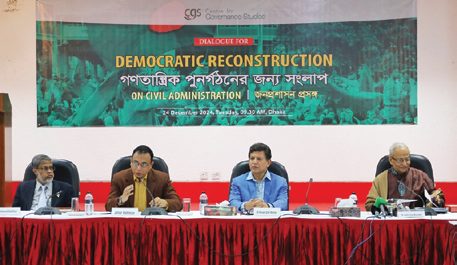
As part of the Centre for Governance Studies (CGS) series of dialogues on priority reform areas for the interim government, a discussion on civil administration was held on December 24, 2024, at the CIRDAP auditorium in Dhaka. The discussion focused on structural inefficiencies, political interference, and the urgent need for transparency and accountability in governance.
Depoliticizing Civil Administration
Participants in the dialogue emphasized that one of the most pressing concerns is the excessive political influence over the recruitment, promotion, and allocation of responsibilities within the civil administration. Many discussants argued that the existing system often prioritizes political loyalty over merit and professionalism, leading to inefficiency and erosion of public trust. Several participants stressed that the administration must be restructured to ensure that competent individuals are appointed to positions based on qualifications rather than political considerations. Many noted that depoliticization would enable civil servants to operate with greater independence, ultimately improving service delivery and strengthening democratic governance. Some participants proposed that a transparent and merit-based recruitment system would create an administration that is both effective and accountable to the public.
Ensuring Accountability and Transparency
Participants highlighted that to establish a well-functioning civil administration, there must be a robust and independent auditing mechanism to hold policymakers and administrators accountable. Many discussants pointed out that transparency in decision-making, open access to information, and structured reporting processes are necessary to ensure good governance. Some participants proposed implementing a systematic approach to accountability so that administrative misconduct does not go unchecked. Several discussants stressed that the culture of avoiding responsibility and manipulating bureaucratic processes must be eliminated by establishing rigid frameworks that demand accountability at every level of governance. Many participants agreed that if any individual or group attempts to evade accountability, mechanisms must be in place to detect and rectify such misconduct.
Preventing Corruption and Promoting Integrity
Participants raised serious concerns about corruption, which they identified as one of the greatest challenges within the civil administration. Several discussants argued that without strict enforcement of anti-corruption laws, fair recruitment and promotion processes cannot be ensured. Many emphasized the need to implement strong integrity policies and ensure that corrupt officials are held accountable. Some participants suggested that integrity and ethics training should be made mandatory for all administrative officials to promote transparency in governance. Many discussants pointed out that in the past, individuals involved in corruption were often rewarded rather than punished, leading to widespread frustration among honest public servants. Several participants proposed that a strict monitoring system must be established to ensure that corruption is actively prosecuted rather than tolerated. Many argued that rewarding individuals for ethical behavior while penalizing those engaged in corruption would help create an environment of integrity and accountability within civil administration.
Reducing Bureaucratic Complexity and Improving Service Delivery
Participants expressed concerns that excessive bureaucratic inefficiencies have made public service delivery slow and inaccessible for many citizens. Some discussants noted that despite significant investments in digitalization in previous years, little tangible progress has been made in simplifying administrative processes. Many participants emphasized that effective digital transformation strategies
must be implemented to reduce red tape and make government services more efficient and accessible. Several discussants argued that by reducing unnecessary delays and procedural hurdles, citizens would be able to access services in a more timely and cost-effective manner. Many agreed that streamlining bureaucratic processes would not only improve public satisfaction but also enhance the overall efficiency of the civil administration.
Changing Administrative Culture and Increasing Public Participation
Participants stressed that a fundamental cultural shift is required in the civil administration to ensure that public service, rather than political patronage, remains the core objective. Many discussants noted that historically, Bangladesh’s civil administration has operated within a patron-client framework, where serving political interests takes precedence over serving the public. Several participants argued that moving away from this model is crucial to fostering a more efficient and citizen-centric administration. Some discussants emphasized that greater public participation in decision-making is necessary to ensure that the administration remains responsive to the needs of the people. Many participants proposed engaging civil society, youth groups, and grassroots communities in shaping administrative policies to lead to more inclusive governance. Several suggested that establishing platforms for direct public consultation and feedback would further enhance accountability and improve service quality. Many discussants strongly advocated for abolishing the practice of politically motivated transfers, promotions, and dismissals to create a stable and professional administration where individuals are evaluated based on their performance rather than their political affiliations.
Enhancing the Role of Civil Society in Policy Formulation
Participants emphasized that to make administrative policies more inclusive and effective, the active participation of civil society in the policymaking process must be ensured. Several discussants argued that including representatives from civil society in policy discussions would make governance more transparent, participatory, and
accountable. Many participants suggested that this approach would help reflect the perspectives and needs of different social groups in administrative decisions. Some discussants pointed out that a government that genuinely seeks input from various stakeholders would be better positioned to address the diverse challenges of governance and build a more resilient administrative structure.
The dialogue was moderated by CGS’s Executive Director, Zillur Rahman, and featured several distinguished speakers. The speakers were;
- Dr. Hossain Zillur Rahman, Economist, Former Adviser to the Caretaker Government of Bangladesh
- Dr. Badiul Alam Majumdar, Head of the Electoral System Reform Commission and Secretary, SHUJAN (Citizen for Good Governance)
- Dr. Muhammad Abdul Mazid, Former Chairman, National Board of Revenue
- Munira Khan, Chair, Centre for Governance Studies (CGS)
- Advocate Subrata Chowdhury, Executive President, Gono Forum
- Mahmudul Islam Chowdhury, Former Mayor, Chattogram City Corporation and Former MP
- Abdullah Hil Rakib, Former Vice President, Bangladesh Garment Manufacturers and Exporters Association (BGMEA)
- Mir Nasir Hossain, Former President, Federation of Bangladesh Chambers of Commerce & Industries (FBCCI)
- Major Gen. (Retd) Amsa Amin, Organizer, Noitik SAMAJ Bangladesh
- Major Gen. A L M Fazlur Rahman, Former Director General of the Bangladesh Rifles (BGB)
- Dr. Jamal Uddin Ahmed, Economist, Former General Secretary, Bangladesh Orthoniti Shomiti
- Mojibur Rahman Manju, Chairman, AB Party
- Dr. Nazmul Ahsan Kalimullah, Professor, University of Dhaka
- Sultana Afroz, Former Secretary
- Bobby Hajjaj, Chairman of the National Democratic Movement (NDM)
- AKM Abdul Awal Majumdar, Former Secretary
- Ibrahim Khan, Former Secretary
- Eiffah Assariah, Student, Department of Public Administration, University of Dhaka
- Tahmid Al Mudassir, Co-ordinator, Anti-Discrimination Student Movement
