Regional Dialogues
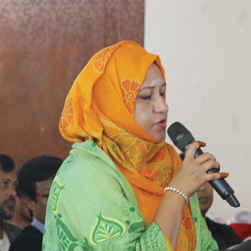
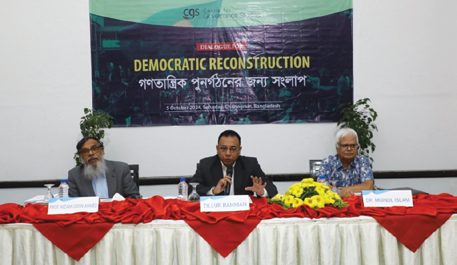
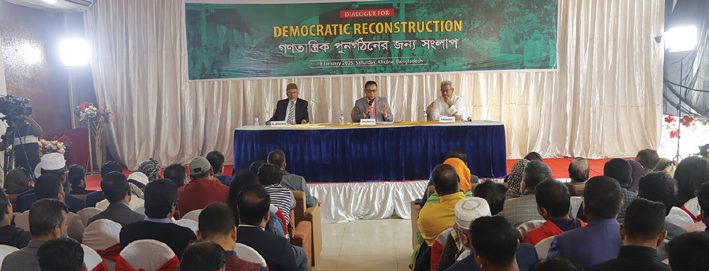
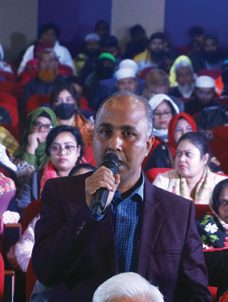
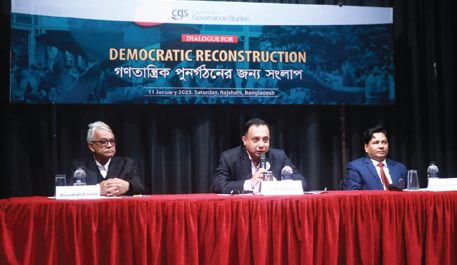
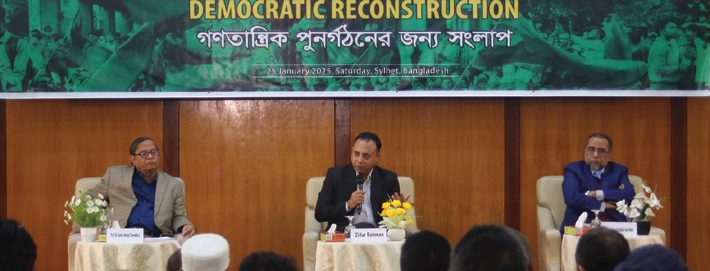
The regional dialogues held in Chattogram, Rajshahi, Sylhet, and Khulna were designed to ensure inclusivity in the reform process, capturing the concerns and expectations of citizens outside the capital. Unlike the national dialogues, which focused on specific reform areas with experts, the regional discussions were open-ended, allowing participants to freely express their views on governance, justice, economic policies, and institutional reforms. This approach provided a bottom-up perspective, ensuring that policy recommendations reflect not only the views of centralized decision-makers but also the lived experiences of people across Bangladesh.
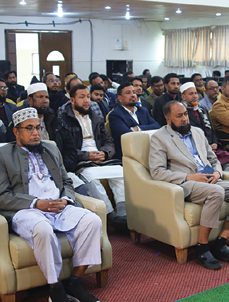
Participants included students, politicians, politicians, grassroots activists, business owners, civil society members, lawyers, journalists, local professionals, and community leaders, representing diverse backgrounds and perspectives. The discussions revealed common frustrations and aspirations, reinforcing the need for a decentralized, accountable, and transparent governance system. Issues such as trust in democratic institutions, justice and human rights, judicial independence, economic stability, and media freedom were raised repeatedly across all four cities.
Unlike the national dialogues, where each reform area was addressed in separate chapters, the regional discussions covered multiple topics simultaneously. Given that the concerns and recommendations from all four cities overlapped significantly, presenting them as separate chapters would have resulted in redundancy and repetition. Instead, this chapter consolidates insights from all four dialogues into a single, cohesive analysis of regional perspectives. By structuring the recommendations in this way, the report ensures that the voices of local communities are fully integrated into the broader reform agenda while maintaining clarity and avoiding unnecessary duplication.
To avoid repetition and redundancy, this chapter consolidates the key concerns and recommendations from all four regional dialogues into a cohesive, thematic analysis. By structuring the findings topic-wise rather than city-wise, this approach ensures a clear, inclusive, and comprehensive policy framework that reflects the aspirations of people from different parts of the country.
Constitutional Reforms and Electoral System
Across all regional dialogues, there was a strong demand for constitutional amendments to prevent the concentration of power in the executive branch and to restore democratic balance. Participants emphasized the need to repeal Article 70, which currently restricts the ability of Members of Parliament (MPs) to vote against their party’s decisions. They argued that this article limits legislative independence and weakens the role of parliament in holding the executive accountable.
Additionally, participants proposed shifting to a proportional representation electoral system to ensure fair political competition and prevent any single party from gaining unchecked power. Many advocated for a bicameral parliamentary system, where an upper house could provide additional checks and balances. Another key demand was the formation of an independent Election Commission, with a transparent and inclusive selection process, ensuring neutrality and preventing political interference.
Judiciary and Law Enforcement Reforms
Concerns over judicial independence and law enforcement accountability were widespread across all four cities. Many participants criticized the politicization of the judiciary and the delays in case processing, which
have eroded public trust in the legal system. They proposed the establishment of a separate Judicial Secretariat to ensure administrative independence from the executive branch. To address the backlog of cases, participants recommended increasing the number of judges, modernizing court procedures, and implementing an alternative dispute resolution mechanism.
Law enforcement agencies were widely criticized for their excessive use of force, human rights violations, and lack of accountability. Participants called for an independent oversight body to monitor police activities and ensure that law enforcement agencies serve public interests rather than political agendas. The abolition of politically motivated promotions and transfers in the police force was also a key recommendation.
Human Rights and Press Freedom
Concerns about human rights violations were dominant in all discussions. Participants highlighted the need to investigate past extrajudicial killings, enforced disappearances, and unlawful detentions, ensuring justice for victims. Many urged Bangladesh to ratify the UN Convention against Enforced Disappearances and to introduce laws that explicitly criminalize such acts.
The Digital Security Act (2018) and the Cyber
Security Act (2023) were heavily criticized for suppressing free speech and being used as tools for political repression. Participants demanded the repeal or significant revision of these laws to prevent misuse against journalists and activists. There was also a strong push for legislative protections for journalists and whistleblowers, ensuring that media professionals can operate freely without fear of harassment or imprisonment.
Civil Administration and Decentralization
The inefficiency and political control over civil administration were major concerns raised in all regional discussions. Participants called for a merit-based and politically neutral public service, where appointments, promotions, and transfers are determined by professional competence rather than political loyalty. There was also strong advocacy for greater fiscal and administrative decentralization, ensuring that local governments have real authority and resources to manage their regions effectively.
Many participants emphasized that local governance bodies should be strengthened to reduce dependency on the central government. The creation of regional administrative hubs and empowering elected local representatives were suggested as ways to improve service delivery and governance at the grassroots level.
Economic Policies and Regional Development
The economic challenges faced by different regions highlighted the need for balanced economic policies that reduce regional disparities. Many participants criticized the over-centralization of economic activities in Dhaka, arguing that it has led to neglect of industrial, agricultural, and infrastructural development in other regions.
In Khulna, participants emphasized the need to revive closed jute mills and introduce alternative industries to boost employment. In Rajshahi and Sylhet, concerns were raised over the lack of investment in agriculture and small businesses, with participants calling for greater financial incentives for farmers, easier credit access for entrepreneurs, and subsidies for rural businesses.
Many also pointed out the corruption and inefficiency in the banking sector, which has resulted in high levels of non-performing loans while small businesses struggle to obtain financing. Stronger financial regulations, SME-friendly policies, and greater transparency in banking practices were identified as necessary reforms.
Education Reform and Youth Empowerment
All four dialogues identified the education system’s failure to equip students with market-relevant skills as a key issue. Participants criticized the inequality in access to quality education, particularly the divide between urban and rural institutions, public and private universities, and general and technical education. There was a strong call for increased budget allocations for education, teacher training, and the integration of vocational training into mainstream education.
Participants also demanded structural changes in university governance, ensuring merit-based recruitment of faculty and freeing academic institutions from political interference. Another key concern was the lack of student representation and democratic practices in universities, with calls for restoring student union elections to promote leadership development among youth.