Mass Media
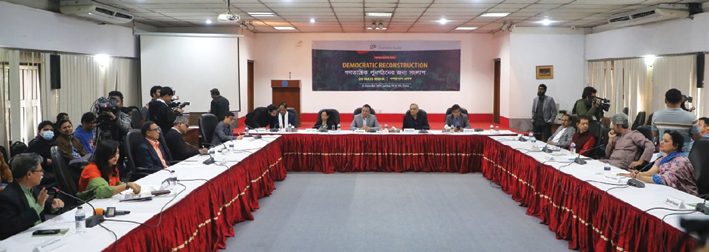
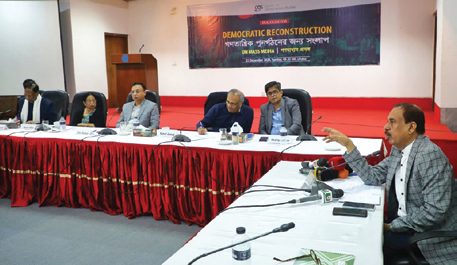
As part of the Centre for Governance Studies (CGS) series of dialogues on priority reform areas for the interim government, a discussion on mass media was held on December 22, 2024 (Sunday), at the CIRDAP auditorium in Dhaka. This discussion explored the challenges facing the media landscape in Bangladesh and potential reforms. A summary of the key discussions is presented below.
The Need for Media Reform
Participants in the dialogue emphasized that over the past sixteen years, the role of mass media in Bangladesh has undergone significant changes, shifting away from investigative journalism toward sensationalism and clickbait-driven content. They raised concerns that the credibility, independence, and impartiality of the media have increasingly come under question.
Several discussants highlighted that the growing reliance on political and corporate sponsorship has made media outlets hesitant to publish critical reports, weakening their ability to function as independent watchdogs. As a result, media freedom has significantly declined, and participants agreed that a major overhaul is needed to restore journalistic integrity.
One of the biggest concerns raised was the media’s tendency to align with the ruling party, making news coverage biased and one-sided. Participants argued that this damages public trust and undermines the media’s role in ensuring people’s right to information. They emphasized that media institutions must uphold neutrality and credibility, reporting objectively regardless of which political party is in power. Furthermore, participants suggested that each media outlet should establish an internal code of ethics that includes:
Fair wages for journalists Commitment to ethical journalism Strict editorial standards to ensure factual accuracy
Many discussants insisted that the pursuit of truth must always take priority over commercial or political interests in journalism.
Press Council and Legal Framework
Participants raised concerns that the current legal framework governing the press poses serious threats to media freedom and free speech. Several discussants pointed to restrictive laws, including the Cyber Security Act, which impose limitations on journalists and curtail press freedom. Many called for these laws to be either repealed or reformed to ensure they do not obstruct journalistic independence.
Additionally, participants emphasized that the existing Press Council must be completely restructured. Some argued that the council is currently weak, ineffective, and largely controlled by retired government officials, preventing it from functioning as an independent regulatory body. A reformed Press Council, they suggested, should be more transparent, accountable, and empowered to protect media freedom.
Several discussants proposed that the leadership of the Press Council must be composed of individuals with deep expertise in journalism rather than government-appointed officials. Many also stressed that the selection process must be democratized, ensuring that journalists’ unions and media organizations play a greater role in leadership appointments. Participants agreed that political interference in media regulatory bodies must be eliminated to preserve press independence.
Media Ownership and Accountability
Participants highlighted that media ownership in Bangladesh is concentrated among a few powerful business and political entities, leading to a lack of diverse perspectives in news coverage. They pointed out that many media owners have direct political affiliations, resulting in one-sided reporting that does not reflect the interests of the general public.
To ensure a free and independent press, several discussants proposed introducing regulations to prevent:
Monopoly ownership of media outlets by a single person or corporation
Corporate influence over editorial decisions Participants also suggested that a clear regulatory framework should be established to oversee both financial and ethical standards in the media industry.
Many discussants raised concerns about the poor working conditions of journalists, stating that many work without job security, stable contracts, or financial protection. They argued that this makes journalists vulnerable to editorial pressure from media owners. To protect journalistic independence, some participants proposed implementing a minimum wage policy to ensure that media professionals can work without economic insecurity or political interference.
Press Freedom and Digital Journalism
Participants noted that alongside traditional media, digital journalism and social media have revolutionized the way information is disseminated. While the rise of online platforms has increased access to information, discussants also pointed out that it has led to the spread of misinformation and fake news.
To address these challenges, participants suggested establishing clear guidelines and policies to regulate digital media without undermining free speech. Some proposed that social media platforms should implement stronger fact-checking mechanisms to ensure the accuracy of news content. Others emphasized that digital media should adopt the same ethical standards as traditional journalism, ensuring that online reporting remains factual and responsible.
Many discussants highlighted that the fast-changing nature of digital media requires a revised regulatory approach that protects freedom of speech while combating disinformation.
Foreign Investment in Media and Its Implications
Participants discussed the complexities of foreign investment in the media sector, describing it as a highly sensitive issue. Some
pointed out that while international funding can improve investigative journalism and professional standards, it also presents risks. Several discussants warned that foreign influence could shape editorial policies in ways that do not align with national interests or values.
To prevent such risks, participants recommended that foreign investments in the media should be carefully regulated to ensure they do not compromise the independence or sovereignty of Bangladesh’s media landscape. Many suggested that a transparent foreign investment policy should be introduced, ensuring that any external funding aligns with the public interest and does not undermine local journalism.
Establishing a Democratic and Accountable Media System
Participants agreed that the ultimate goal of media reform is to establish a democratic, transparent, and accountable press system. Many emphasized that the media should be free from government and corporate influence while remaining accountable to the public. They argued that the press should function as the fourth pillar of democracy, holding those in power accountable and providing citizens with accurate information.
To achieve this, discussants proposed that the media industry undergo a structured reform process, including:
Strengthening regulatory bodies to ensure transparency
Implementing strict internal ethical guidelines for media outlets
Establishing independent oversight mechanisms to monitor press freedom violations
Additionally, participants stressed that media organizations must be held accountable for the accuracy of their reporting. Several discussants pointed out that journalists should be provided with fair compensation and job security to prevent financial or political pressures from influencing their work.
Ultimately, participants agreed that the goal of media reform is to create an environment where free, ethical, and fact-based journalism can thrive, serving the interests of the public rather than powerful political or business entities. Achieving this, they argued, will require collective efforts from journalists, media organizations, government regulators, and civil society.
The dialogue was moderated by CGS’s Executive Director, Zillur Rahman, and featured several distinguished speakers. The speakers were;
- Kamal Ahmed, Chief of the Media Reform Commission
- Shafiqul Alam, Press Secretary to the Chief Adviser of Bangladesh
- Munira Khan, Chair, Centre for Governance Studies (CGS)
- Matiur Rahman Chowdhury, Chief Editor, The Daily Manab Zamin
- Abu Sayeed, Former State Minister, Ministry of Information
- Mahbub Morshed, Managing Director & Chief Editor, Bangladesh Sangbad Sangstha (BSS)
- Miraj Ahmed Chowdhury, Founder, Digitally Right BD
- S. M. Shameem Reza, Professor, Department of Mass Communication & Journalism, University of Dhaka
- Qadaruddin Shishir, Fact Check Editor at AFP
- Zyma Islam, Senior Journalist, The Daily Star
- Masood Kamal, Senior Journalist
- Abu Saeed Khan, Senior Journalist
- Zonayed Saki, Politician and Coordinator of Ganosamhati Andolon Bangladesh
- Parveen F Chowdhury, NHK TV, Japan
- M A Aziz, Senior Journalist
- Tuhin Khan, Member, Nagorik Committee.