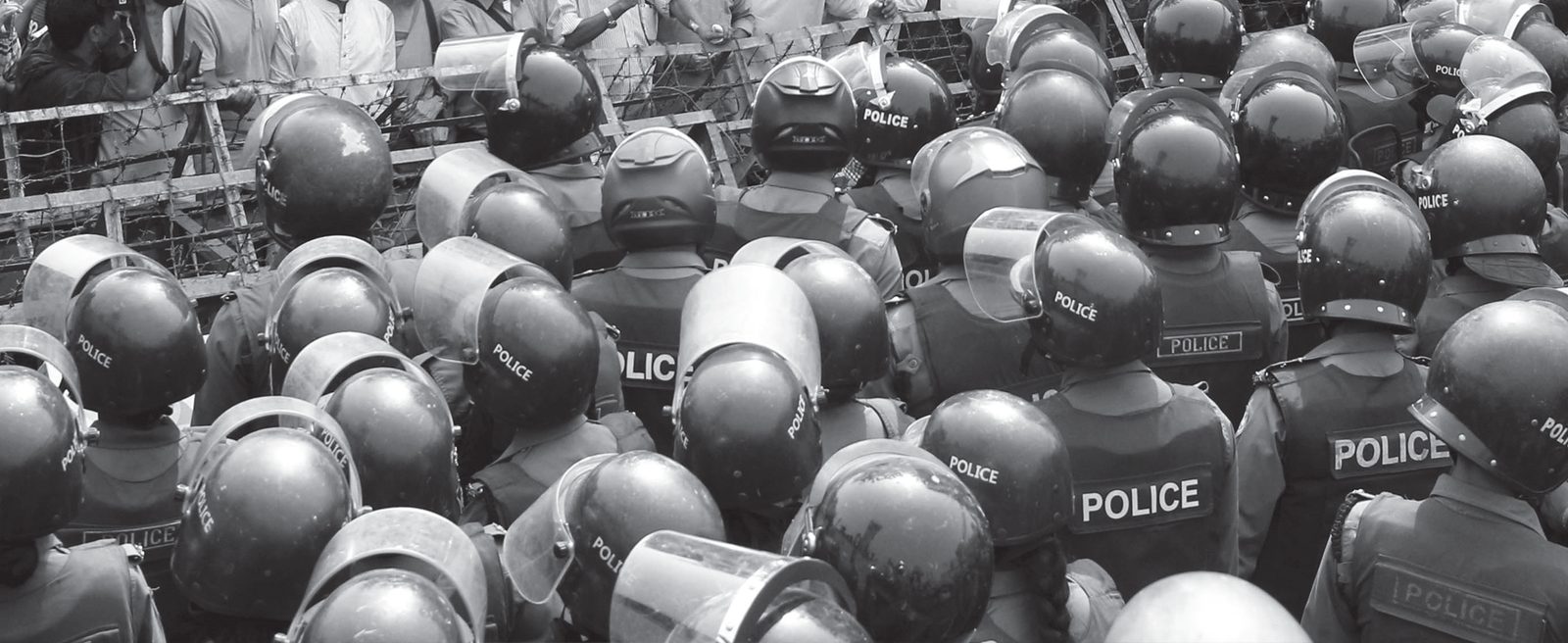
Economic Policy
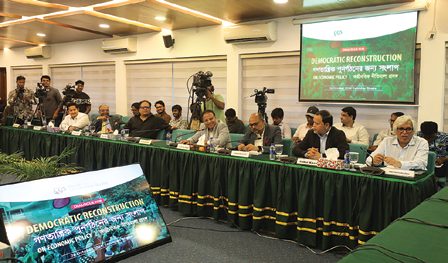
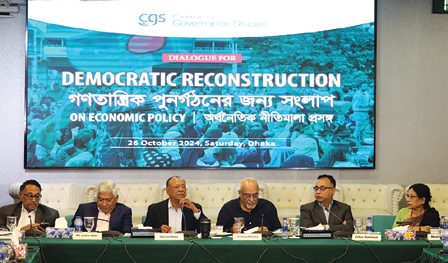
As part of the Centre for Governance Studies (CGS) series of dialogues on the priority reform areas for the interim government, a discussion on economic policies was held on October 26, 2024 (Saturday), at the Bangladesh Institute of International and Strategic Studies (BIISS) auditorium. This discussion explored the key economic challenges currently facing the country and the necessary steps to overcome them. The summary of the key discussions is presented below.
Economic Crisis
Participants in the dialogue emphasized that Bangladesh’s economy is currently facing severe distress. They highlighted that the dollar shortage has disrupted supply chains for import-dependent industries, causing major setbacks in securing essential raw materials. This crisis, combined with fluctuating global commodity prices and dwindling foreign exchange reserves, has led to market instability.
Discussants also raised concerns about irregularities and loan scandals in the banking sector, which they argued have further complicated the economic situation. They pointed out that rising foreign debt and financial crimes such as money laundering are exacerbating the country’s economic vulnerabilities.
To build a sustainable economy, participants suggested that Bangladesh needs a strong financial policy framework. They stressed the importance of ensuring good governance in the banking sector to restore public confidence. Additionally, some participants proposed modernizing foreign exchange policies and offering special incentives for expatriate Bangladeshis to help stabilize the dollar market and boost remittances.
Unemployment Crisis
Participants identified unemployment as one of the biggest economic and social challenges in Bangladesh. They cited alarming statistics showing that 83% of Bangladesh’s unemployed are young people aged 15-29 who are not engaged in employment, education, or training, significantly reducing the country’s economic productivity. Several discussants pointed out that many highly educated young professionals are forced to migrate abroad due to a lack of suitable job opportunities, leading to a brain drain, while low-skilled and semi-skilled workers struggle to find stable employment.
A major concern raised by participants was the disconnect between academia and industry, which results in graduates lacking the skills demanded by the job market. To address this issue, they recommended developing a decentralized employment roadmap to create job opportunities in rural areas. Some participants also suggested introducing special credit programs and unemployment benefits for young people to encourage entrepreneurship and boost economic activity.
Declining Quality in Education
Participants emphasized that the lack of quality education remains a major challenge for Bangladesh’s future workforce. They pointed out that universities suffer from infrastructural limitations and insufficient research opportunities, making it difficult for students to compete at an international level. Several discussants criticized the focus of most educational institutions on theoretical learning rather than practical application, leaving graduates unprepared for real-world challenges.
To improve the education sector, participants called for better budget allocation and financial transparency. They also stressed the need for increased investment from the private sector to enhance research and innovation. Additionally, some discussants proposed making technical and vocational education mandatory and implementing regular training programs for teachers to improve the overall quality of education.
Instability in the Banking Sector
Participants expressed serious concerns over the severe liquidity crisis in Bangladesh’s banking sector, which they attributed to the alarming rise in non-performing loans (NPLs). They criticized the role of banking cartels and political interference in weakening transparency and accountability, which they argued has discouraged public trust and investment.
To fix the broken banking system, several participants proposed establishing a strong Banking Commission to oversee and audit banking operations. They also stressed the need for strict enforcement of banking laws and responsible financial management to restructure the financial sector.
Rising Inflation
Many participants highlighted inflation as a long-term economic issue in Bangladesh. They argued that market cartels have artificially driven up the prices of essential goods, making basic necessities unaffordable for lower-income groups. Weak government oversight and inefficient market monitoring, they noted, have further aggravated the crisis.
To control inflation, participants urged the government to enforce stricter regulations on market cartels and introduce stronger price monitoring systems. Some discussants also suggested using digital technology in supply chain management to increase transparency and stabilize the market.
Environmental Degradation
Participants raised concerns that the implementation of mega projects has often ignored environmental considerations, leading to deforestation, destruction of agricultural land, and loss of biodiversity. These issues, they argued, have been exacerbated by climate change, causing further ecological damage.
To ensure sustainable development, participants recommended that all mega projects must incorporate environmental protection policies. Several discussants emphasized the importance of actively involving local communities in project planning and implementation to minimize environmental harm. Additionally, they called for strict enforcement of environmental laws and regular monitoring.
Foreign Exchange and Remittance Challenges
Participants pointed out that Bangladesh’s foreign currency crisis and money laundering have become major economic threats. Many expatriate Bangladeshis, they noted, are losing confidence in the remittance system, leading to a decline in foreign exchange reserves.
To increase foreign reserves,
participants suggested strengthening anti-money laundering laws and ensuring greater involvement of diplomatic missions in attracting foreign investment. Some discussants also proposed providing investment and savings incentives for expatriates to encourage more remittance inflows.
Neglect of Women Entrepreneurs and Small Businesses (SMEs)
Participants highlighted that women entrepreneurs and small and medium enterprises (SMEs) have long been overlooked in Bangladesh’s economic policies. They noted that these groups receive little policy support or financial incentives, which limits their ability to grow and contribute to the economy.
To enhance their participation, participants recommended introducing easier access to loans, tax benefits, and financial support programs. They also suggested implementing cluster-based policies and leveraging technology to expand market opportunities for small businesses. Several discussants emphasized the need for entrepreneurial training programs and access to key resources to empower women entrepreneurs and SMEs. Some participants also called for financial stimulus and targeted policy support to further boost economic productivity and enhance employment opportunities.
Economic Inequality and Marginalized Communities
Participants raised concerns about the continued exclusion of ethnic minorities and marginalized groups from mainstream economic development. To address this, they proposed introducing affirmative action policies and targeted incentives to bridge the gap. Some discussants also stressed the need for education and skill development programs tailored to these communities to increase their economic participation and job opportunities.
Political Instability and Economic Governance
Many participants argued that political instability and the centralization of power have significantly undermined good governance in Bangladesh. They emphasized that a decentralized political system and transparent elections are essential to restoring stability and strengthening democratic institutions. Several discussants noted that if the interim government can ensure political unity, democratic institutions will become more resilient and capable of withstanding future challenges.
Need for Tax Reform
Participants identified lack of transparency and modernization as key weaknesses in Bangladesh’s tax system. They argued that the government must expand tax collection by bringing informal sectors under the tax net. Some discussants suggested using automation and digital technology to increase tax efficiency and improve compliance.
To boost the tax-to-GDP ratio, participants called for structural reforms in tax administration, emphasizing that an efficient and transparent tax system is crucial for long-term economic stability.
The dialogue was moderated by CGS’s Executive Director, Zillur Rahman, and featured several distinguished speakers. The speakers were;
- Dr. Debapriya Bhattacharya, Economist, Distinguish Fellow, Centre for Policy Dialogue (CPD)
- Munira Khan, Chair, Centre for Governance Studies (CGS)
- Dr. Rashed Al Mahmud Titumir, Economist, Professor, University of Dhaka
- Parvez Karim Abbasi, Assistant Professor, Dept. of Economics, East West University
- Professor Dr. Sayema Haque Bidisha, Pro-Vice-Chancellor, University of Dhaka Department of Economics
- Shahidul Islam Zahid, Professor, Department of Banking and Insurance, University of Dhaka
- Abdul Awal Mintoo, Former President of the Federation of Bangladesh Chambers of Commerce and Industry (FBCCI)
- Anwar-Ul Alam Chowdhury (Parvez), President, Bangladesh Chamber of Industries (BCI)
- Muhammad Abdul Mazid, Chairman, The Social Development Foundation, Former Chairman of the National Board of Revenue
- Md. Jashim Uddin, Former President, Federation of Bangladesh Chambers of Commerce and Industry (FBCCI)
- Shahedul Islam Helal, Former President, Bangladesh Chamber of Industries (BCI)
- Asif Ibrahim, Committee Chair, Federation of Bangladesh Chambers of Commerce and Industry (FBCCI)
- Abdul Haque, President of Bangladesh Reconditioned Vehicles Importers and Dealers Association (BARVIDA)
- Sabur Khan, Chairman, Daffodil Group and Former President, Dhaka Chamber of Commerce & Industries (DCCI)
- Prasenjit Chakma, Former Assistant Resident Representative, UNDP Bangladesh, Chief Consultant, Padeco Co., Ltd.
- Mir Nasir Hossain, Former President, Federation of Bangladesh Chambers of Commerce and Industry (FBCCI)
- M S Shekil Chowdhury, Chairman, Centre for Non-Resident Bangladeshis
- Dr. M Abu Eusuf, Economist, Professor, Department of Economics, University of Dhaka
- Suprova Suvha Zaman, Student, Department of Economics, University of Dhaka
- Shadik Mahbub Islam, Former Student, Department of Economics, University of Dhaka
- Saleh Ahmed, Political Observer