
The Global Context
Socially responsible investing is a global phenomenon. With the international scope of business itself, social investors frequently invest in companies with international operations. As international investment products and opportunities have expanded, so have international SRI products. The ranks of social investors are growing throughout developed and developing countries. In 2006, the United Nations Environment Program launched its Principles for Responsible Investment (PRI) which provide a framework for investors to incorporate environmental, social, and governance (ESG) factors into the investment process. PRI has more than 1,500 signatories managing more than US$60 trillion of assets.
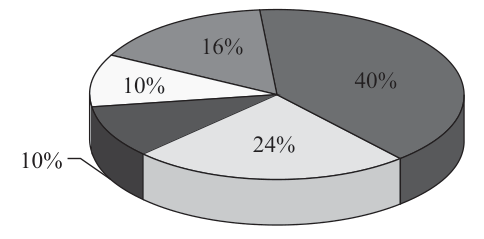
Europe Asia Pacific North America Africa and Middle East Latin America
Source: UNEP Fl, http://www.unepfi.org/signatories/index.htmp (Accessed: 12.07.2016).
Since 1985, most of the major investment organizations have launched ethical and socially responsible funds, although this has led to a great deal of discussion and debate over the use of the term “ethical” investment this is because each of the fund management organizations tend to apply a slightly different approach to running their funds. In recent years there has been growth in the market for high social impact investments; this is a style of investing where the businesses receiving investment have social or environmental goals as a primary purpose. UK institutions are also getting more involved in social investing through impact investing funds, with those such as Deutsche Bank and NESTA, alongside other institutions such as Big Issue Invest, which is part of The Big Issue Group.Socially Responsible Investing (SRI) is a growing force in markets across the world. According to the US SIF Foundation, the responsible investing market in the US increased 486 percent while the broader US market of professionally managed assets grew 376 percent between 1995 and 2012. SRI investments are generally demand-side driven. More and more investors are looking for vehicles that are aligned with their values and priorities. In 2014, the total Assets Under Management (AUM) of the 1,278 signatories of the UN Principles for Responsible Investment (PRI), which include asset owners, investment managers and professional service partners, totaled $45 trillion. The SRI niche is not going away.
These investors want to send signals to the market economy regarding the way they want to get things done. For example, the California Public Employees’ Retirement System (CalPERS) actively encourages corporations to improve environmental responsibility, examine executive compensation, and include more women and people of color in their boards. Investment beliefs adopted by the CalPERS board affect its organizational culture, and in turn, the organization has intensified its own focus on sustainability. To be a sustainable, prosperous organization, CalPERS’ long-term liabilities must also be sustainable, because some of them will be on their books for nearly 100 years.