

SME Sector in Bangladesh
Small and Medium Enterprises (SMEs) form an integral part of economies throughout the world with their significant contributions to tax revenues, employment, distribution of wealth across regions and segments, supply of products and services, and poverty alleviation benefits.
Furthermore, the SME sector works as a stepping-stone for many ambitious micro-enterprise entrepreneurs and provides growth opportunities for large scale enterprises through engaging local supply chains and acting as a buffer. SMEs tend to employ intermediate technologies and generate significant employment opportunities with modest capital inputs. In a developed economy, SMEs facilitate a logical bottom-up relationship with micro enterprises and a top down relationship with large scale enterprises as a supply chain of products, services, financial resources, human resources, technology, and soft knowledge. Through these relationships with other sectors, SMEs help build healthy, sustainable economies, and, consequently, the development of SMEs helps expand productive employment opportunities and reduce poverty (Jasra, Khan, Hunjra, Rehman & Azam, 201 1:275).
Many governments worldwide have recognized importance of SMEs to sustainable economic development through establishing policies, laws, regulations, fiscal incentives, and environmental infrastructure, and administrative supports conducive to the growth and development of the SMEs. Likewise, the present Bangladeshi government has also put much emphasis on the development of the SME sector, considering it “the driving force for industrialization” (Bangladesh Bank, 2016). However, many kinds of SMEs have struggled, leading to unemployment in the sectors of textiles, leather, medicine, loom, food, chemical, and rubber (Jahur and Quadir, 2007). Studies have linked SME failure to a wide range of causes, including capital shortages, lack of access to financing, and human and technological limitations (Chowdhury, 2007; Mintoo, 2006; Marsden, 1992; Steel, 1994). One survey ranked Bangladesh 92 out of 122 countries in a capital access index, demonstrating the credit crunch in the country’s industrial sector (James, et.al. 2007).
Operational Definition of SMEs
The identification and measurement of SMEs is based on two criteria: number of workers and amount of investment. While this definition has changed over time, SMEs can be identified on the basis of these two criteria according to National Industrial policy 2016 (Table 1).
Note that any enterprise that meets the criteria for “small” in one category while qualifying for “medium” on the basis of another criteria is considered a “medium” enterprise. Similarly, according to the SME Investment Policy & Programs of Bangladesh Bank, an enterprise shall be considered a “small” enterprise if it falls into the “micro” category on one criteria and “small” category on another criteria (Source: Bangladesh Bank). This policy document further stipulates that cottage and micro-enterprises were to be incorporated under the SME Investment Policy & Programs of Bangladesh Bank.
| SI | Type of Industry | Number of employed workers | ||||||||||||
|---|---|---|---|---|---|---|---|---|---|---|---|---|---|---|
| The amount of investment | ||||||||||||||
| (Replacement cost and | ||||||||||||||
| value of fixed assets, | ||||||||||||||
| excluding land and factory buildings) | ||||||||||||||
| 1 | Cottage Industry | Below 10 lakh | Below 16 employees | |||||||||||
| 2 | Micro Industry | 10 lakh to 75 lakh | 16 to 30 | |||||||||||
| 3 | Small Industry | Manufacturing | 75 lakh to 15 crore | 31 to 120 | ||||||||||
| Service | 10 lakh to 2 crore | 16 to 50 | ||||||||||||
| 4 | Medium Industry | Manufacturing | 15 lakh to 50 crore | 121 to 300 | ||||||||||
| Service | 2 core to 30 crore | 51 to 120 | ||||||||||||
| 5 | Large Industry | Manufacturing | More than 50 crore | More than 300 | ||||||||||
| Service | More than 30 crore | More than 120 |
Table 1: Definition of SMEs on Size of SME Investment
Sub-sectors of the SMEs
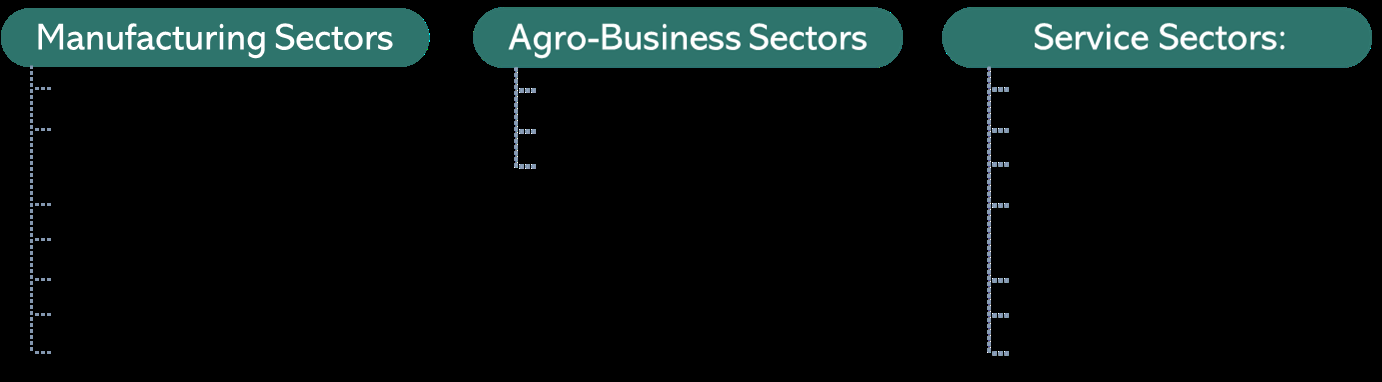
There are 33 industrial sectors in Bangladesh organized into three overarching categories (Manufacturing, Agro-Business, and Service), and Bangladeshi SMEs are classified into these sectors based on the products and services they provide. Initially, the government established different SME hubs across Bangladesh. They are located in several districts, including Greater Dhaka, Chittagong, Bagura,
The report examines the status of SMEs with regard to the number of establishments, employment, investment, and indirect taxes. Khulna, Jessor, Bhairab, Tangail, Moulvi Bazar, and Maymensingh (Valuka).
In addition, the SME Foundation has formed about 117 SME Clusters, also organized by products and services, to facilitate implementing development strategies. The following list of major SME industries outlines the categorization system of Bangladeshi SMEs:
The general status relating to all types of business sectors of economy is listed in Figure 1:
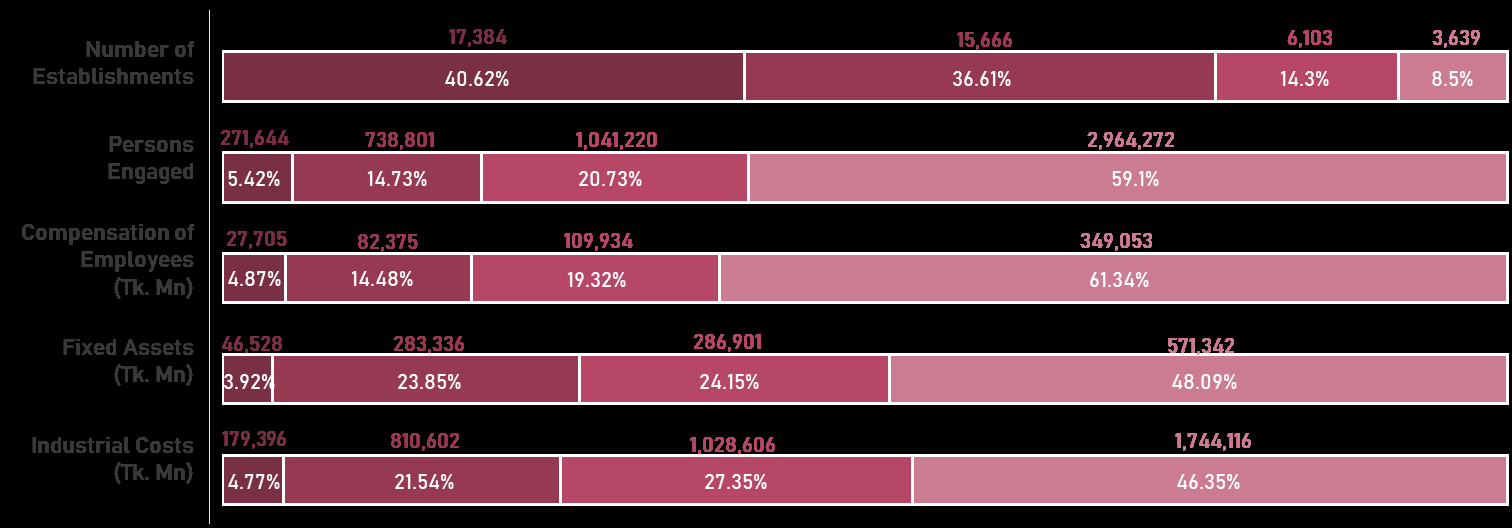
Figure 1: Status of SMEs in the Economy of Bangladesh
Source: Economic Survey 2013, Bangladesh Bureau of Statistics.
Table 2: Status of Micro Cottage Small and Medium Enterprises on Area and Employment
| Type | Establishments | Total Persons Engaged (TPE) | ||||||||||||||||||||||||
|---|---|---|---|---|---|---|---|---|---|---|---|---|---|---|---|---|---|---|---|---|---|---|---|---|---|---|
| Total | % | Urban | Rural | Total | % | Male | Female | |||||||||||||||||||
| Cottage | 6,842,884 | 87.52 | 1,730,150 | 5,112,734 | 13,168,327 | 53.75 | 11,759,565 | 1,408,762 |
| TOTAL | 7,818,565 | 100 | 2,229,546 | 5,589,019 | 24,500,850 | 100 | 20,449,132 | 4,051,718 |
|---|
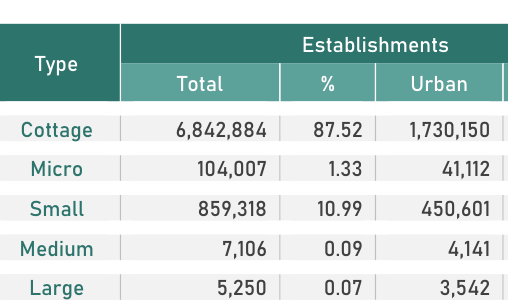
Figure 1 shows that SMEs constitute 50.91% of the total number of micro-economic units in Bangladesh. This sector is found to have employed 35.49% of the total employed persons; contributed 33.80% of total compensation of employees; invested 48% of total investment in fixed assets; and incurred 48.88% of total industrial costs in the economy. These results indicate that SMEs play an important role in creating employment opportunities through investment in both rural and urban areas and meeting the demands, both financial and non-financial, of people across country.
SMEs, including micro and cottage industries, constitute a large share of establishments and in the
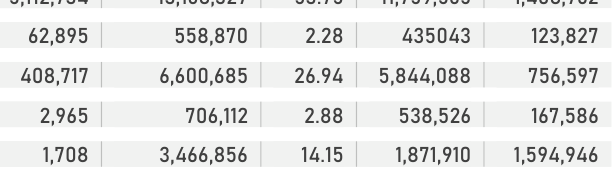
economy of Bangladesh (Table 2). These contributions substantiate the importance of SMEs to the development of Bangladesh’s economy. The contributions of SMEs in Bangladesh goes beyond employment generation and includes adding value to the economy, consequently contributing to the country’s socio-economic development (Figure 2).
Available data shows that SMEs in Bangladesh have contributed 48.41% to gross output; 47.63% to gross value added; and 38.36% to the national exchequer in the form of indirect taxes.
In short, SMEs in Bangladesh represent the most important factor to the country’s economic growth.
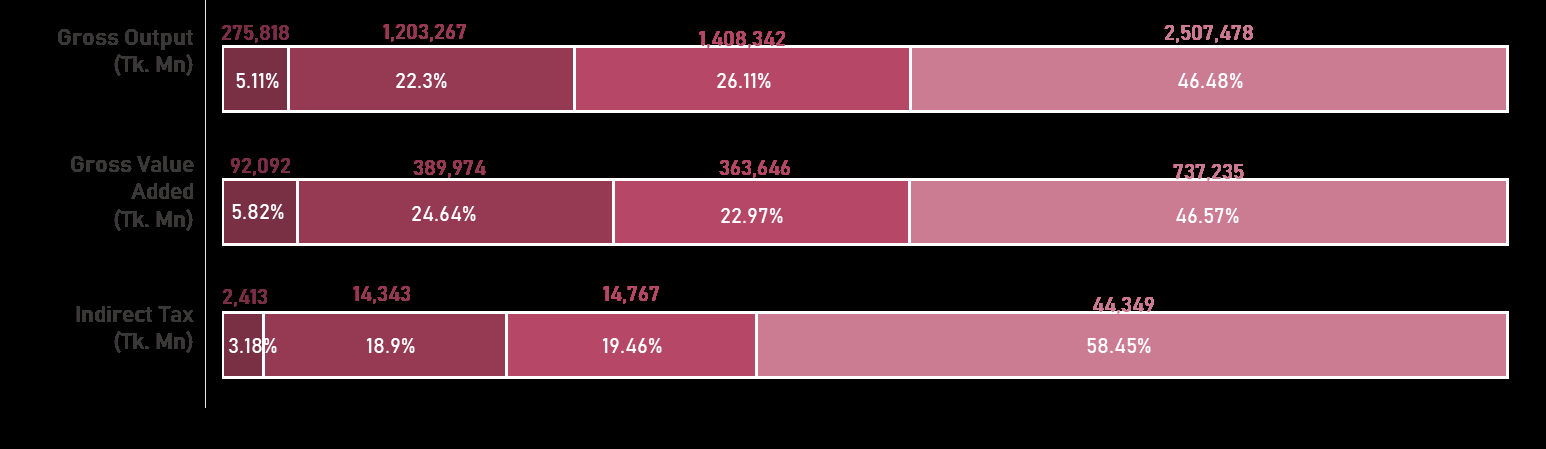
Source: Economic Survey 2013, Bangladesh Bureau of Statistics.
The role of SMEs also depends on their form of ownership. The status of SMEs in Bangladesh is documented in Table 3.
According to the Economic Survey 2013, SMEs in Bangladesh feature many kinds of ownership structures. Table 3 shows that 46.60% of state-owned enterprises, 51.01% of private enterprises, 50% of joint ownership enterprises, 46.88% of joint ventures, and 33.84% of foreign ventures belong to the SME sector. Interestingly, all state-owned enterprises are either medium enterprises or large enterprises foreign investors have allocated about 44% of their total investment into SMEs.
SMEs in Asia have received the attention of foreign investors, NGOs, supra-national entities, and central governments. Governments have recognized the importance of SMEs for their economic sustainability through different policy, programs, and support services, but these efforts are missing growth targets. With greater investment, SMEs have the potential to grow and develop at a faster rate in any economy.
Table 4 shows that the SMEs represent only 50.91% of all enterprises in Bangladesh, a significantly lower share than the other listed countries. Furthermore, the contribution of SMEs to Bangladesh’s GDP only outranks Pakistan, and Bangladeshi SMEs rank last in contributions to employment. These three indices demonstrate that SMEs in Bangladesh have untapped growth and development potential compared to other countries in Asia.
Table 3: Status of Micro Cottage Small and Medium Enterprises on Area and Employment
| Details | Micro | Small | Medium | Large | Total | Percentage | |||||||||||||||||||
|---|---|---|---|---|---|---|---|---|---|---|---|---|---|---|---|---|---|---|---|---|---|---|---|---|---|
| of SMEs | |||||||||||||||||||||||||
| Government | 00 | 00 | 48 | 55 | 103 | 46.60% | |||||||||||||||||||
| Private | 17,384 | 15,666 | 5,877 | 3,304 | 42,231 | 51.01% | |||||||||||||||||||
| Government & Private Jointly | 00 | 00 | 14 | 21 | 35 | 50.00% | |||||||||||||||||||
| Joint Venture (Local & Foreign) | 00 | 00 | 75 | 85 | 160 | 46.88% | |||||||||||||||||||
| Foreign | 00 | 00 | 89 | 174 | 263 | 33.84% | |||||||||||||||||||
| Total | 17384 | 15666 | 6103 | 3639 | 42792 | 50.87% | |||||||||||||||||||
| Distribution (%) | 40.62 | 36.61 | 14.30 | 8.50 | 100.00 |
| Country | SMEs as % of all enterprises | Contribution of SMEs to GDP (%) | Contribution of SMEs to Employment (%) | ||||||||||
|---|---|---|---|---|---|---|---|---|---|---|---|---|---|
| Bangladesh | Bangladesh | 50.91 | 50.91 | 20.25 | 20.25 | 35.47 | 35.47 | ||||||
| India | 97.60 | 80.00 | – | ||||||||||
| Pakistan | 60.00 | 15.00 | 80.00 | ||||||||||
| China | 99.00 | 60.00 | 92.00 | ||||||||||
| Japan | 99.70 | 69.50 | 72.00 | ||||||||||
| Hong Kong | – | – | 61.50 |
Table 4: Growth Opportunities of SMEs in Bangladesh
September 30, 2019; Asian Development Bank 2014.