

NDC Base year and projection scenarios
For the NDC update, 2012 has been considered for the base year following the Third National Communication of Bangladesh, detailing a comprehensive national GHG emission inventory for 2012. Energy, IPPU, AFOLU and Waste Sectors were considered for GHG emission inventory preparation.
It is stated in the NDC submission that in 2012 total GHG emission accounted for 169.05 million tons CO2 equivalent (MtCO2e). The Energy Sector held the highest contribution to the total GHG emission at 93.09 Mt CO2e or 55.07% of the total emission. Following that, the AFOLU sector contributed 27.35% of the total, Waste contributed 14.26%, and IPPU contributed 3.32%.
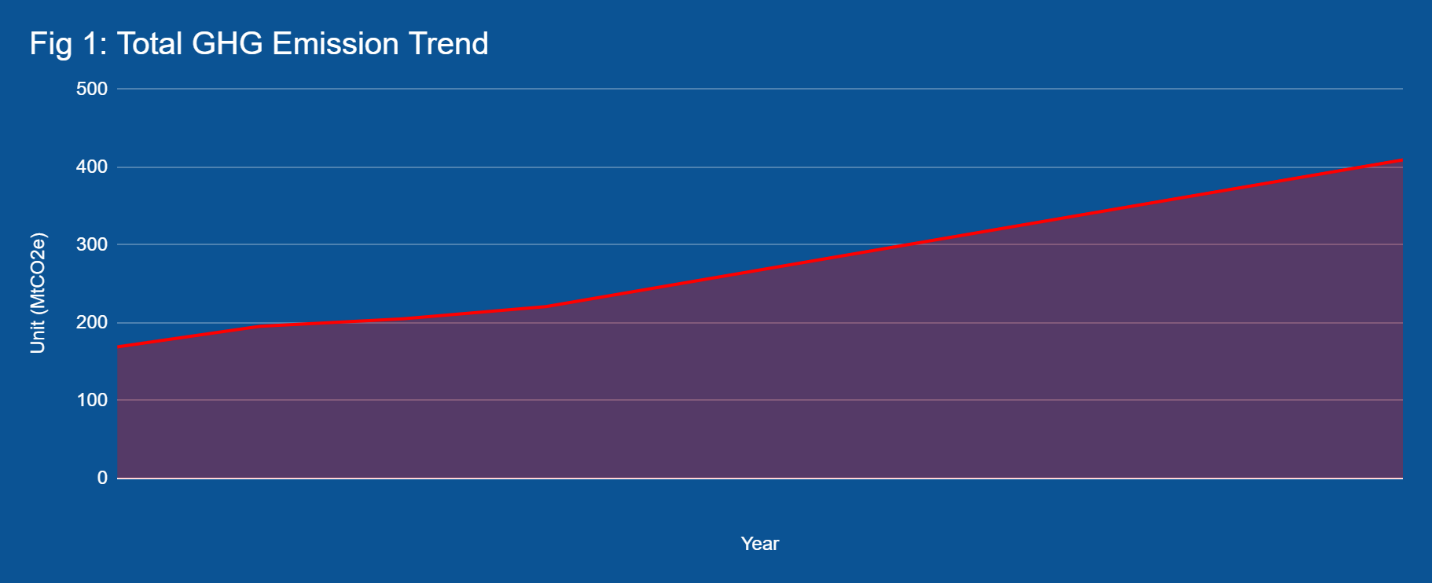
The NDC submission also provides an estimation of the level of GHG emissions Bangladesh might have in 2030. Fig 1 shows the estimated trend of GHG emissions in Bangladesh according to data from the NDC and the World Bank.
There are three main scenarios under which GHG emission levels in 2030 are projected in the report. They are:
– The Business as Usual scenario (BAU) – The unconditional mitigation scenario – The conditional mitigation scenario
The first is the Business as Usual (BAU) scenario which is prepared considering the contribution of emission sources and information collected from the relevant agencies of different ministries following the IPCC 2006 reporting guidelines. In this scenario, Total GHG emission is found to be increased from 169.05 Mt CO2e in 2012 to 409.4 Mt CO2e in 2030 under the BAU scenario with an increase of 2.4 times than base year. This scenario represents the projected GHG emission levels if no mitigation action is taken. Fig 2 shows the sector-wise emission increase presented in the NDC submission:
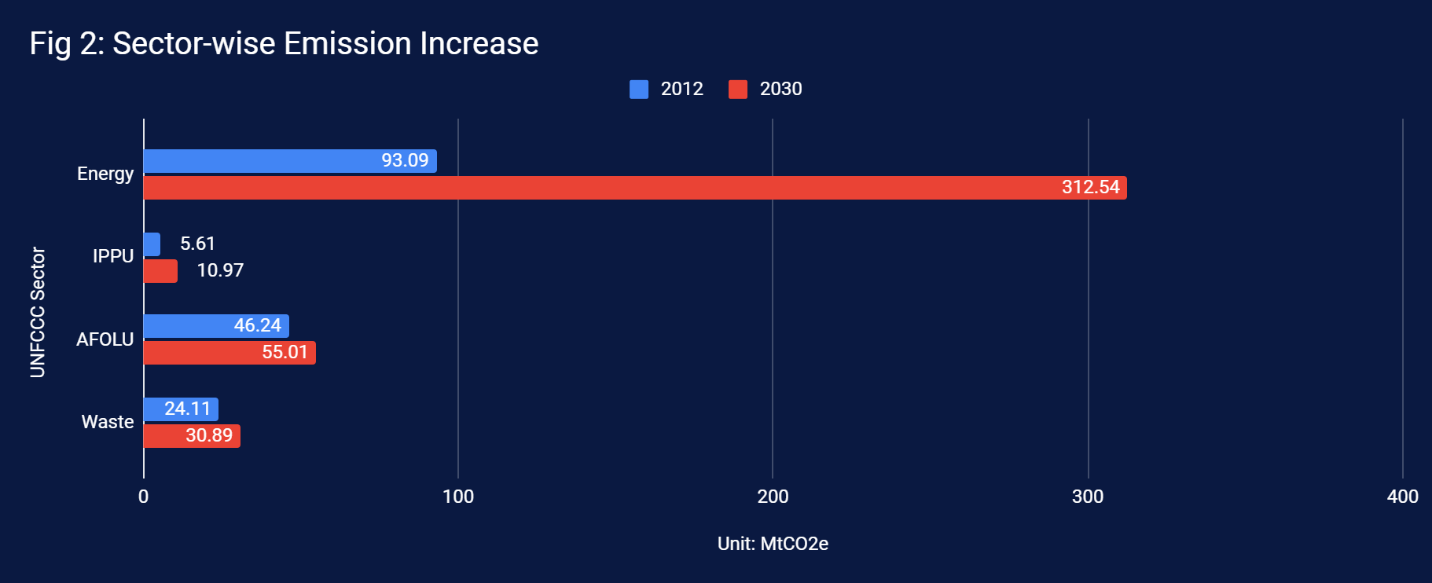
As shown in Fig 2, the sector-wise emissions under the BAU scenario by 2030 are 312.54 Mt CO2e (76.34% of total) in Energy; 10.97 Mt CO2e (2.68% of total) in IPPU; 55.01 Mt CO2e (13.44% of total) in AFOLU; and 30.89 Mt CO2e (7.55% of total) in Waste Sectors.
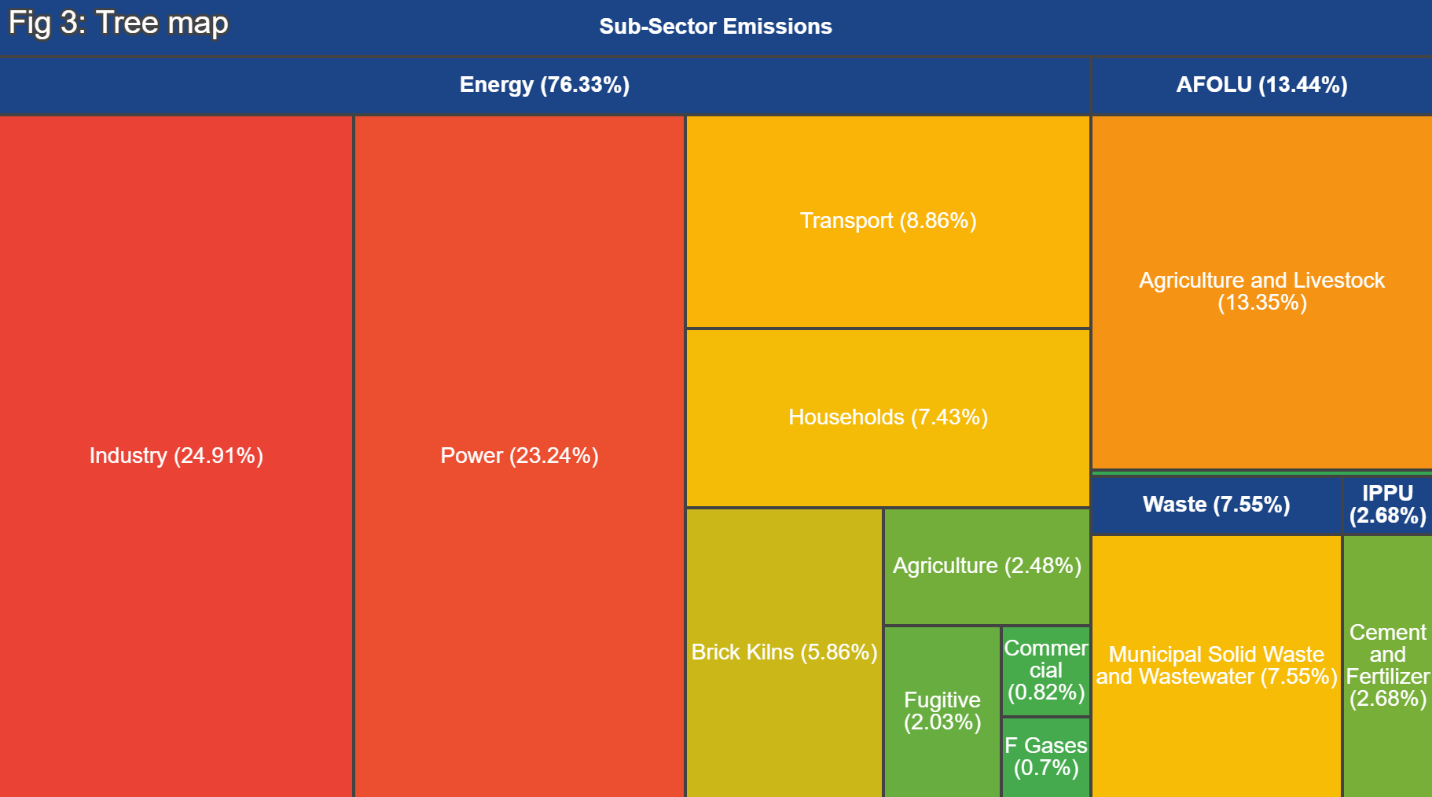
The highest contribution (24.91% of total) of GHG emission is found for Industry (energy) subsector followed by Power (23.24% of total) and Transport (8.86% of total) under the Energy Sector. A detailed breakdown of emissions by subsectors is provided in Fig 3:
The second scenario is the Unconditional Mitigation Scenario. In the unconditional scenario, GHG emissions would be reduced by 27.56 Mt CO2e (6.73%) below BAU in 2030 in the respective sectors. 26.3 Mt CO2e (95.4%) of this emission reduction will be from the Energy sector while 0.64 (2.3%) and 0.6 (2.2%) Mt CO2e reduction will be from AFOLU (agriculture) and waste sector respectively. There will be no reduction in the IPPU sector.
The third is the Conditional Mitigation Scenario. In the conditional scenario, GHG emissions would be reduced by 61.9 Mt CO2e (15.12%) below BAU in 2030 in the respective sectors. This reduction is in addition to the proposed reductions in the unconditional scenario. The conditional mitigation measures will be implemented by Bangladesh, only if there is external financial/technology support. The conditional scenario has 59.7Mt CO2e (96.46%) emission reduction from the Energy sector, while 0.4 (0.65%) and 1.84 (2.97%) Mt CO2e reduction will be from AFOLU (agriculture) and Waste Sector respectively. There will be no reduction in the IPPU Sector. Fig 4 shows the estimated GHG reduction under unconditional and conditional scenarios:
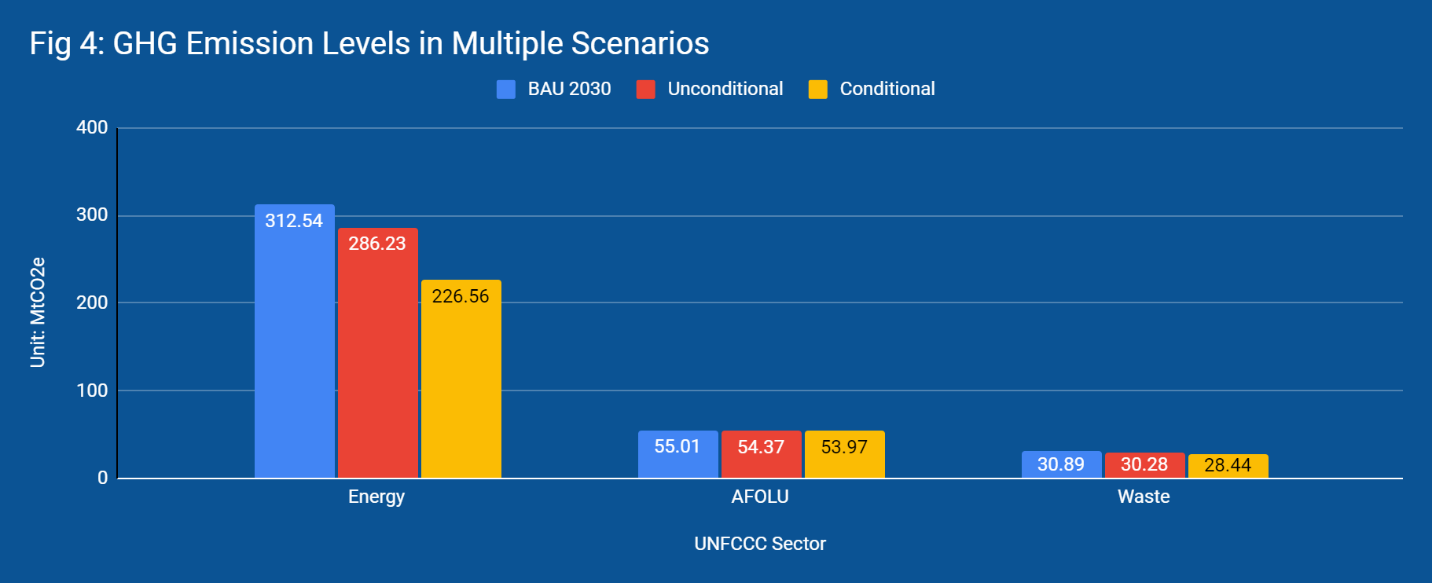
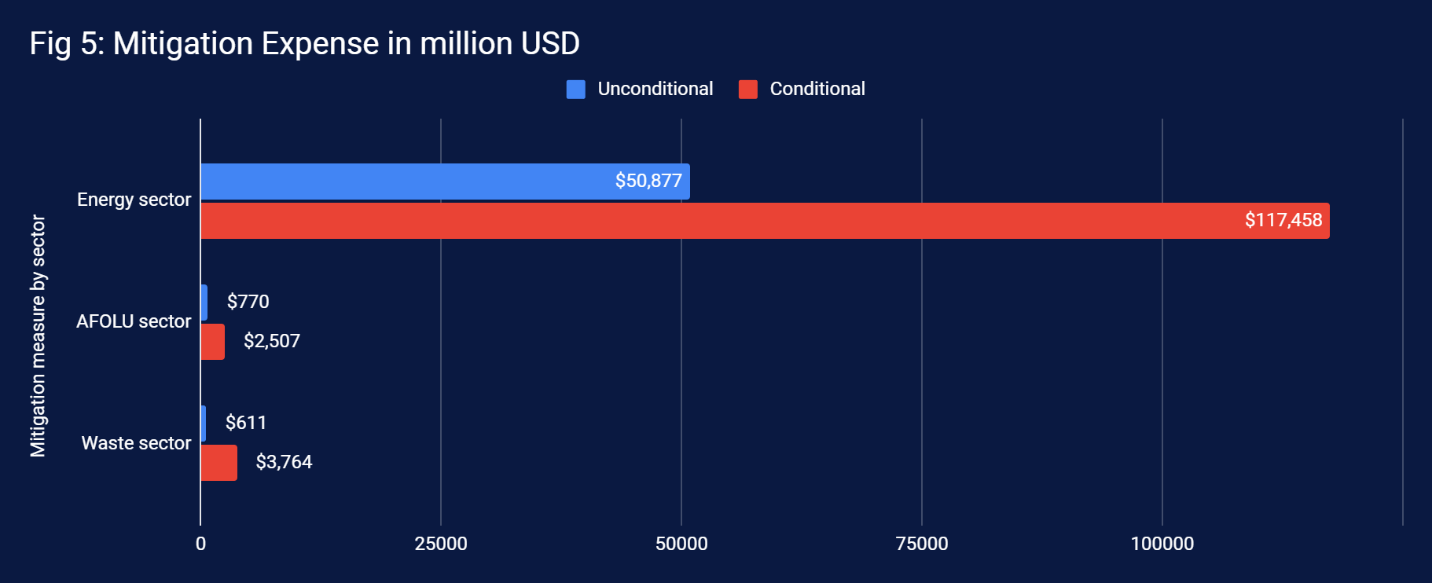
Fig 5 shows the estimated cost difference in implementation between the unconditional and conditional
| Unconditional Scenario | Conditional Scenario | |||
|---|---|---|---|---|
| Energy Sector | ||||
| Power | ||||
| Implementation of renewable energy projects of 911.8 MW | Implementation of renewable energy projects of | |||
| 4114.3 MW | ||||
| Grid-connected Solar-581 MW, Wind-149 MW, Biomass-20 MW, Biogas-5 MW, New Hydro-100 MW, SolarMini-grid-56.8 MW | Grid-connected Solar-2277 MW, Wind-597 MW, | |||
| Biomass-50 MW, Biogas-5 MW, New Hydro-1000 | ||||
| MW, SolarMini-grid-56.8 MW, Waste to | ||||
| Electricity- 128.5 MW | ||||
| Installation of new Combined Cycle Gas based power plant (3208 MW) | Coal power plant with Ultra supercritical | |||
| technology- 12147 MW |
mitigation actions: