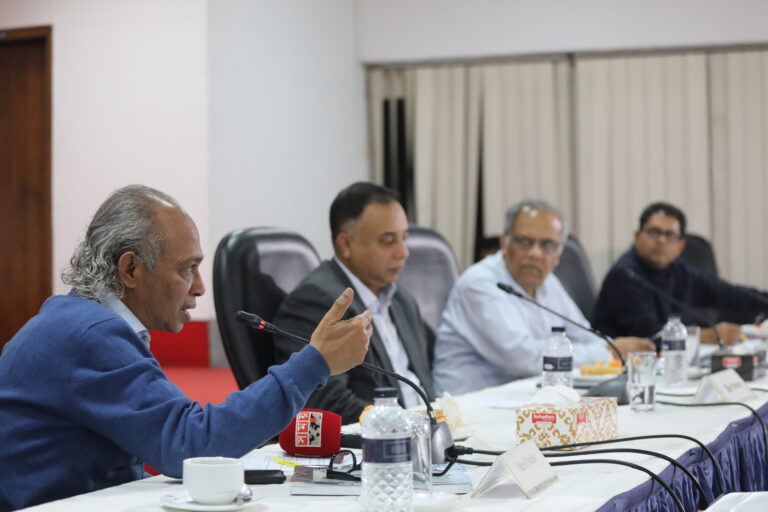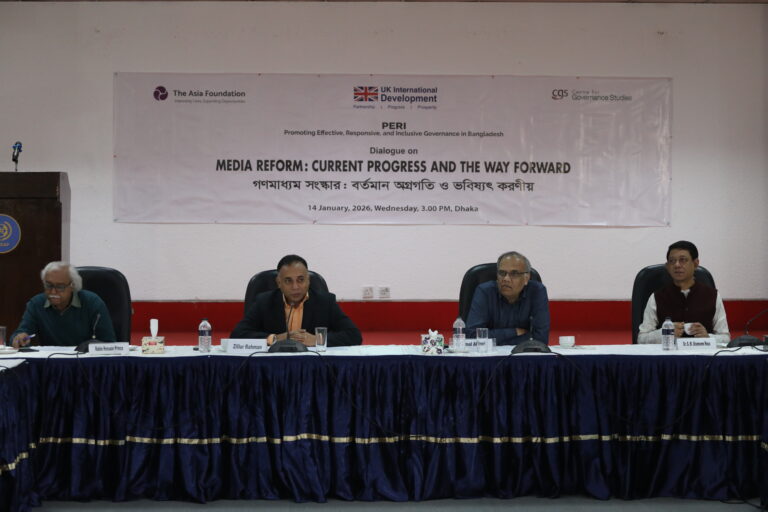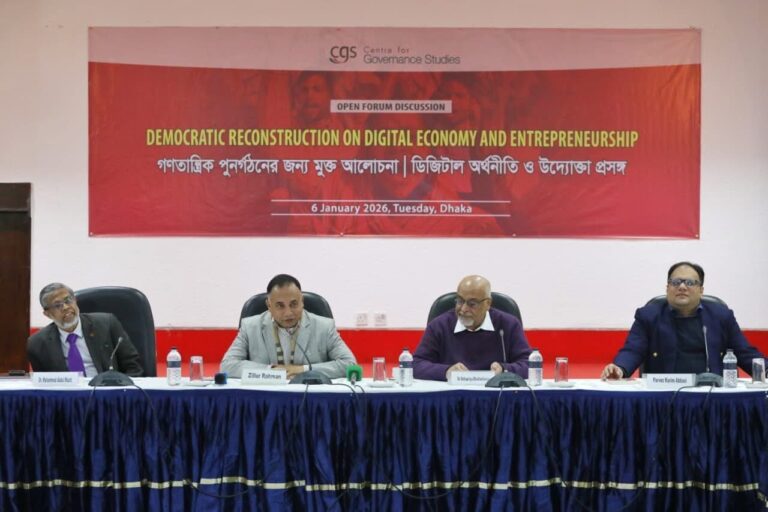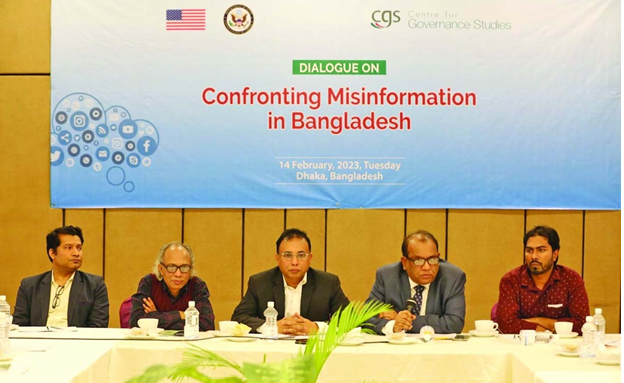
The Centre for Governance Studies (CGS), in collaboration with the US Department of State, arranged a dialogue titled "Confronting Misinformation in Bangladesh". The discussion was held at Sky City hotel in Dhaka on February 14, 2023.The executive director of CGS, Zillur Rahman, moderated the discussion, and CGS chairman Dr Manjur A Chowdhury chaired the event. The project studied how the nature and spread of misinformation change during the election period.
This dialogue was the first of a series of dialogues and training sessions under a joint project by CGS and the US Department of State. The project aims to organize a series of dialogues with senior editors, journalists, professional fact-checkers and social media influencers to understand how misinformation is reproduced and recirculated in Bangladesh.Present at the event were members of various media organizations in Bangladesh. The key speakers at the dialogue were:
According to New Age Editor Nurul Kabir, the government is currently Bangladesh's biggest source of disinformation and misinformation. According to him, the recent news of Bangladesh's self-sufficiency in food is fake news as Bangladesh still has significant spending in importing rice and wheat from abroad.Similarly, he stated that the news of Bangladesh's capability to export electricity to Nepal is also fake news, as Bangladesh is struggling with energy deficiency issues even in winter. He accused members of the incumbent government and those in opposition parties of spreading disinformation and fake news about their own party's historic achievements.
AFP Fact Checker Editor Qadaruddin Shishir stated that those who spread fake news are usually bad actors motivated by religious, financial, and political reasons. According to him, mainstream media is also sometimes an active component in spreading misinformation, as fake news is becoming prominent in national-level newspapers. He concluded that more training is needed among journalists to raise awareness of misinformation and disinformation.
Various other issues that Journalists regularly face in the line of work became apparent during the dialogue. These issues include the cumbersome and ineffective implementation of the Right to Information Act, the prominence of paid content creators circulating fake news on social media, the ongoing attitude of self-censorship, the unhealthy competition among outlets to release breaking news, and excessive work pressure on reporters.
After a roundtable discussion, the participants took part in a survey and a focus group discussion to divulge more detailed information and their perspectives on fake news. The data collected during these dialogues will be used to enhance the capacity of journalists and encourage social media influencers in Bangladesh to effectively counter misinformation by fact-checking during election periods.