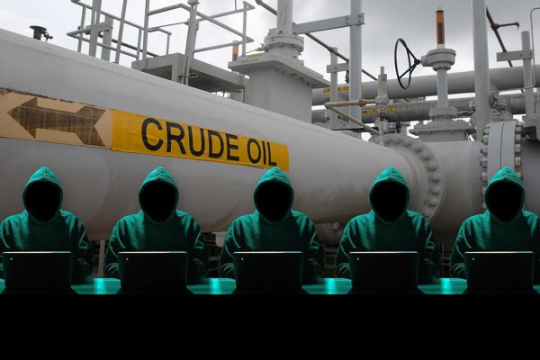
A few days ago, cyber criminals hacked into one of the largest oil pipelines in the US, which halted operations after its corporate IT network was knocked offline. If the engineers don't fix the system on their own or the owners cough up the ransom that the hackers are demanding, millions of Americans will soon feel the heat of cybercrime in their daily lives, through higher prices at the gas pump.
Who pulled off this attack, and what does it tell us about the vulnerability of critical infrastructure and the rules (or lack thereof) in cyber conflict today?
The culprit. The US government has blamed the Colonial Pipeline cyber attack on Dark Side, a relatively new group of veteran hackers from Eastern Europe famous for bragging about its exploits online, and leaking data dumps from victims who don't pay up. The Dark Siders style themselves as Robin Hoods of the hacker world, donating (a minuscule) part of their profits to global NGOs such as Children International and The Water Project. But this time they may have bitten off a bit more than they can chew.
Dark Side issued on Monday a rare apology for creating "problems" to society, insisting they only want money and are not at all interested in politics, although they do seem to avoid former Soviet bloc nations. That's common for cyber criminals based in these countries, whose governments will look the other way as long as hackers target victims outside their borders.
One of those governments is that of Russia, with a long history of outsourcing its dirty cyber work to unscrupulous hackers. Joe Biden says there's no evidence that the Kremlin was involved this time, but does have "some responsibility."
The problem. The fact that a bunch of geeks armed with laptops shut down a pipeline that serves 45 percent of America's oil refineries shows that US critical infrastructure is a lot more vulnerable to cyber-extortion than we'd like to think. And the Biden administration's $2 trillion plan to upgrade US infrastructure across the board turns cyber security into an even more urgent concern.
As always, the pandemic has made everything worse. Ransom ware attacks — and cybercrime in general — have boomed in COVID times, largely as a result of IT systems that became more vulnerable when companies rushed to adapt them for remote access. Moreover, hackers are now targeting bigger firms for a lot more money thanks to the rise of crypto currencies, which make it easier for them to get paid and harder to trace.
Ransom ware attacks are particularly problematic for companies and countries because they are forced to make a tough choice: pay off hackers and risk encouraging further such attacks, or hold out and take the economic or social disruption on the chin.
The response. The Colonial Pipeline hack shows how cyber attacks can do severe damage to a country by disrupting critical infrastructure. But as we've written before, these types of operations are hard to prevent, and even harder to attribute and respond to.
So far, the US government has declared a state of emergency to keep the oil flowing to the Eastern Seaboard. But at this point it can't do much more to stop the hackers, or hold them responsible for a brazen attack that would otherwise be considered an act of war against America. It can't even prevent the corporation from paying the crypto currency ransom.
What it can do mostly depends on whether a foreign government was involved, or aware of what Dark Side was cooking. If that's confirmed later on, the US may want to hit that country harder than with the usual economic sanctions. There could even be political pressure to respond proportionately in cyberspace — perhaps with a similarly damaging attack. And when the cyber gloves are off, things could get very bad, very fast.
Gabrielle Debinski is a Staff Writer at GZERO Media.
This article was originally published on GZERO.
Views in this article are author’s own and do not necessarily reflect CGS policy.