In this article 16
- El Mehdi Talib
- Which of these systems will replace the current system?
- China’s success with its ‘go game’ strategy
- Besides the Middle Empire and to a lesser extent, other powers have arrived
- China’s potential as a great power
- China’s campaign to expand foreign influence
- The US’ failure in the ‘relay race’ for foreign influence
- US withdrawal from international agreements
- Examining the visions of the US and China
- A clash of visions in action
- Potential to shift the world order
- Peace as the continuation of war by other means
- Redistributing the ‘cards’ among world powers
- A likely shift towards a multi-polar system
- A dynamic equilibrium?
- Forecasting a multilateral future, suffering a unilateral present
Today’s crisis further emphasizes the need for a world order based on multilateralism.
El Mehdi Talib
The balance of the world order has never been less stable since the end of the last century. Human history is accelerating with technological progress. Globalization has paved the way for new powers. The polarity system has become changeable.
The end of the bipolar system (where the USA and USSR worked as the only two powers capable of imposing an overlay over all other countries, leaving them with no other choice than to make alliances) after the collapse of the Soviet Union permitted the US to become the hegemon in a unipolar system.
The master of the world dominates international institutions and alone decides actions, such as the first Gulf war, the war in Kosovo, the intervention in Afghanistan, second Gulf war, and sanctions against Iran and North Korea. Such decisions and actions have weakened the US, because being a samurai is exhausting.
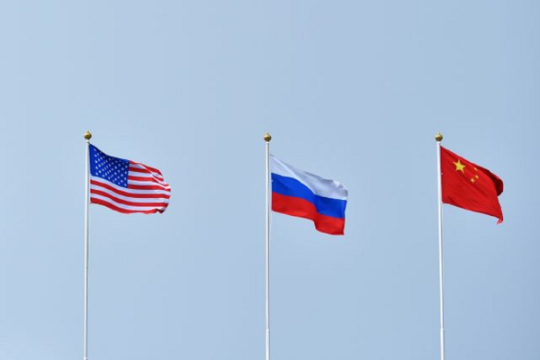
American political scientist Samuel Huntington evokes a uni-multipolar world, in which, alongside the American superpower, five other powers will emerge: China, Russia, the European Union, India, and Brazil. From these emerging powers, one rises: China, which is sharply narrowing the gap with the American hegemony.
Kenneth Organski explains in his book “World Politics” power transition theory, where the uni-multipolar world is the system whose equilibrium is least stable: Because the hegemon can no longer decide on its own, it must work with others. Otherwise it will face an alliance of powers against it.
The scale of the current COVID-19 health crisis has further tested this unstable balance. The pandemic is aggravating tensions between the US and China and has unveiled a kind of unilateralism between countries.
Organski defined three possible systems of governance: The polarity, the hierarchy, and the anarchy systems. This prompts the question:
Which of these systems will replace the current system?
I will approach this subject from the tip of the iceberg. I will begin by describing the facts and I will continue my analysis by making hypotheses of what might happen, and not what should happen. Therefore, my approach will be realistic and not idealistic — not looking at the way systems and power dynamics are supposed to be, but the way they are. I will also bring into question the impact of COVID-19 on global geopolitics.
Every economic crisis raises the question of the decline of the US. This is only a metaphor because it is not the United States that has declined. Rather, other powers have emerged. This emergence suggests a relevant question: How did the US allow this?
To answer this question, it is crucial to know that states can exercise power at three levels when it comes to addressing challenges such as migration, drugs, terrorism, pandemics, etc.: Military, economic, and international. A power can fall at this third level because the resolution of such problems requires smart power: A combination of soft and hard power.
A country that uses soft power to address such problems will have a positive result. Conversely, a country that uses hard power will have no positive result — one or both parties will lose.
A great global force, the United States considers the world as part of its community
It intervenes all over the globe against terrorism and rogues states. The rising power of neoconservative policy, in line with the current Rousseauism, helped the US to be stronger and impose the American cultural model beyond its borders — the model that England named “Manifest Destiny” when it landed in the Mayflower in 1620.
This policy has led the US to face to armed militias in a new type of war, a form that they do not know, which Martin Van Creveld evokes in his book “The Transformation of War”: “My postulate is that, already today, the most powerful modern armed forces are largely irrelevant to modern war — indeed that their relevance stands in inverse proportion to their modernity.”
The neoconservatives respond with a strategy which Barnett called the “Pentagon’s New Map.” The idea is to have in each region of the world a geopolitical pivot capable of intervening against “rogue states” and contributing to the costs. For example, for the Gulf region, Saudi Arabia is the pivot state against Iran.
Thanks to its military and economic strength, the US remains the most powerful nation in the world. However, according to Christian Chavagneux in his 2004 “International Political Economy” publication, “the United States benefits from globalization but they do not control it.”
The United States waging a war in Afghanistan and Iraq while other states take advantage of the opportunity to expand their economy, notably countries from Asia, confirms this statement. For example, China joined the World Trade Organization (WTO) in 2001 and increased market shares in all continents, thanks to an apparent strategy of soft power: Go game strategy.
China’s success with its ‘go game’ strategy
The most popular game in Asia is “the go game,” which, unlike chess, does not seek to eliminate the opponent but rather to assimilate. In this game each party seeks to win territories by encircling the opponent, who becomes a prisoner.
Compared to the West’s binary vision where the world is either good or bad, the Chinese adapt to situations and ride the wave, sometimes weak, sometimes strong, sometimes passive, sometimes active, aimed by the principles of Yin and Yang found in the strategy of Sun Tzu’s 5th century work, “The Art of War.” This principle aims to subdue the enemy without combat: War is based on lies; “appear weak when you are strong, and strong when you are weak”; “ attract your opponent by promises; defend yourself, and if [your opponent] is strong, avoid him.
Thanks to its policy of refraining from intervening in the internal affairs of states, China has gained the confidence of its partners and has been able to expand its sphere of influence around the globe.These conditions have earned China double-digit GDP growth for several years, and a current growth around 6%.
Although Chinese GDP per capita is still far below that of the US, its overall GDP has generated a budgetary reserve of more than $2.5 trillion. This has enabled China to increase its military budget by 8% every year. It applies a “go out” policy, investing everywhere across the globe, providing multi-billion dollar loans that no other country is capable of offering. For example, see the $9 billion that China has loaned to the Democratic Republic Of Congo.
This policy allowed Chinese companies to settle abroad and bring western technology, making China in 2009 the country with the highest number of patents. The United States estimated that China was violating the rules of WTO, accusing it of infringing intellectual property rights for its companies by imposing on others the transfer of their technologies for access to the Chinese market.
Besides the Middle Empire and to a lesser extent, other powers have arrived
The European Union uses normative power (soft power) to expand, but remains dependent on NATO and its large member states, such as Germany, France, Spain, Italy, and Poland, which do not want to delegate any national sovereignty. Because of this, Europe is struggling to find a common policy on major issues such as the attitude towards Russia, the instability of several countries that surround European borders, the migration issue, and the economic response regarding COVID-19.
Russia is a military and global energy power. Under the influence of the powerful Eurasian geopolitical movement of Aleksandr Dugin, Russia is developing a strategy of access to the warm seas by three axes: The Moscow-Berlin axis, the Moscow-Tokyo axis, and the Moscow-Tehran axis.
Over time Russia has developed energy diplomacy, allowing it to put constant pressure on Europe. Nevertheless, it continues to face a number of challenges: Its economy depends on its energy and arms sales, its negative demography, and its internal problems linked to the Turkish-speaking people.
India’s project is the Indian Ocean and Southeast Asia as part of its “Look East Policy” strategy. With the help of the US, India is preventing the ASEAN countries (Association of Southeast Asian Nations) from falling into China’s hands. In its foreign affairs, India is using the art of duplicity exposed in the “Mahabharata”: “Carry your enemy on your shoulders until you get what you want from him then throw him down, trample him, destroy him as a pot of earth smashed against a rock.”
India bases its geopolitics on the concept of the Mandala developed in “Arthashastra” (320 BC). This concept puts India in the center of a circle, surrounded by a loop of opponents (China and Pakistan), and then by a second loop of opponents of the opponents (Russia and Iran). India’s biggest dispute is with its nuclear neighbor, Pakistan, over Kashmir.
Japan is returning to the path of military normalization, becoming a regional middle power independent of the US. Japan is facing challenges such as negative demographics, the Korean nuclear threat, and conflicts with its neighbors over closest islands.
Brazil is an energy power rich in oil and biofuels from sugarcane. Its geopolitics are based on control of Amazon, the advancement of South-South relations, and reaching towards Antarctica and West Africa. It is also a member of a group of major emerging economies known as BRICS (Brazil, Russia, India, China and South Africa).
Turkey plays an important role in the transport of hydrocarbons to Europe. It has an energy interdependence with Russia, but at the same time these two countries are fighting for the same sphere of influence. Turkey is more and more economically present in Africa, Latin America, Asia, and Europe. Its popularity has also increased in the Arab world. Turkey is facing challenges such as Kurdish and Cypriot problems and its identity, shared between West and East.
These powers’ rapid emergence is the consequence of US-led interventionist policy.
China’s potential as a great power
Among these powers, only China is positioned as a peer-competitor. The only country capable of competing to become the world’s hegemon, it meets the four qualities required to be a great power:
The first relates to hard and soft power. It exercises soft power with its cultural model called “Rightful place under heaven,” an alternative to the American model of “Manifest Destiny.” This model helps China to keep calm its neighbors who worry about the growing threat. It also holdshard power with its military power, particularly its maritime power. In 2009, China acquired its second aircraft carrier, the first 100% Chinese.
The second quality is its motivation, expressed by its desire to question the status quo. The third quality is its presence on the global stage, especially in sensitive regions and in regions rich in raw materials. The fourth quality is the doubtful outcome of an eventual hegemonic war: A victory for the US is not guaranteed.
To consolidate its position as a peer-competitor, China has embarked on a series of economic and political reforms, developing its rural environment with the help of its former President Hu Jintao and by reforming institutions. It has also strengthened the social cohesion of its population with the development of its civil society and the return to Buddhism, in its Chinese version, and to Confucianism.
This return reinforces the hierarchical model of Confucius (500 B.C.): “The sovereign fulfills his duties as a sovereign, the minister his duties as a minister, the father his duties as a father and a son his duties as a son.” China does not limit its hierarchical vision to its own society, but sees the whole world as a pyramid of which it is on top and the other countries are its partners. Conversely, the West sees a polar balance of power worldwide.
China’s campaign to expand foreign influence
Beyond these internal reforms, China has increased its sphere of foreign influence through economic ties, making many countries dependent on it due to a risk of collapse should they end relations with China. We can cite as examples the ASEAN countries; Saudi Arabia, for which China is the main oil customer; Iran; Iraq; Turkey; South Africa’ Angola; and the US itself.
China has made alliances with major emerging powers such as BRICS, within the framework of its South-South policy. This is promoted by the Chinese political movement “Global South School”; and the Shanghai cooperation organization (OCS) is promoted by the movement “Asia First”.
Then there is the Pharaonic project of the “New Silk Route.” This project includes infrastructure for maritime, land, and rail transport across several Eurasian countries, with the aims of development and the ability to bypass the China Sea in case of conflict. This project will involve 160 countries and more than two-thirds of the world’s GDP, and will cost several trillion dollars.
The US’ failure in the ‘relay race’ for foreign influence
Despite American genius, human psychology is always the same: Imagine a 4×400 meter relay race. When the first runner is several steps ahead from his opponents, the second tends to relax until he loses the rhythm. When the gap is reduced, he can no longer find his second wind. Under the pressure of the stopwatch, the third and fourth runners, who must catch up with the accumulated delay by the second, desperately switch from tactic to tactic to secure their position.
The US suffers the fate of these runners. Led by President Bush, the US reduced its efforts, having gained several lengths ahead of its adversaries at the end of the Cold War. Meanwhile, China has reduced the gap in the race. With the arrival of President Obama at power, the US abandoned their neo-conservative and coercive policies (70% stick, 30% carrot) and initiated a return to the realistic “Hamiltonian” movement. This movement advocates pragmatism and realism.
Pressed by time, the US has passed from strategy to strategy and from political movement to political movement. First it tried to use a political reconciliation diplomacy called the “Bismarckian System” (in reference to 19th century German chancellor Otto Von Bismarck), in which the US tried to forge alliances with all the emerging powers preventing them from allying with each other.
This strategy was not enough to slow the Chinese runner. The arrival of Trump signaled a new political change, the isolationist “Jacksonian” movement, in reference to 19th century American President Andrew Jackson, which defends national interest without hesitating to apply cooperative policy (70% carrot, 30% stick).
The discontinuity in American politics due to the frequent change of movements and strategies contrasts with the continuity in Chinese policy, attributed to a single party and the centralization of decisions.
US withdrawal from international agreements
The growing tension between the two powers attest, as explained by Organski, the strong instability of this uni-multipolar system, which puts American hegemony and China as peer competitors. There is a risk that one power or the other may no longer recognize international regulatory authorities, which guarantee stability and consequently weaken multilateralism.
This situation reminds us of the US withdrawal from the Paris climate agreement, from the intermediate-range nuclear missile treaty, from the Iranian nuclear agreement, and recently from the WHO, and, above all, the blocking in December 2009 of the WTO dispute settlement body accused by President Donald Trump of dysfunction.
Trump threatens to withdraw from the organization if it does not revise the status of China, which, according to him, is exploiting its status as a developing country to take advantage of WTO. The European Union shares the same position as the United States. Should there be a withdrawal, the world risks falling into a system of anarchy where each state will seek to arm itself in order to survive, in a sort of security dilemma of the self help of Waltz.
Examining the visions of the US and China
The United States is in favor of a system of polarity, possible by respecting the rules of Morton Kaplan. Those rules are to negotiate; to not humiliate the opponent, because interests, not alliances, are eternal, and yesterday’s enemy can become today’s friend; and to prevent a power from seeking global governance.
To achieve this, the United States uses the “Bismarckian System” of alliances and the triangular strategy: Navy bases form triangles to dominate the seas, as the British did before, in what is called “Offshore Balancing Power.” This creates a “Regional Security Complex” to help the weakest country in case of conflict.
This strategy has benefited Afghanistan against India, South Korea and Japan against China, and Southeast Asia against China in their conflict in the South China Sea. All these countries fear the domination of China, and welcome the presence in the region of the seventh largest US fleet.
If the United States wants to protect the polarity system, the Chinese want a hierarchical organization. They also have the means to pressure the USA and its allies. For example, China controls 90% of rare minerals essential for high technology, repurchased $800 billion of US debt, and repurchased €630 billion of European Union debt.
A clash of visions in action
Theoretically, this disparity in points of view between the two powers can lead to unpleasantries, even to a hegemonic war. If a war were to take place, its triggering factor would probably be the conflict on the Spratly and Paracel Islands between China and its ASEAN neighbors. In the highly sensitive conflict, which involves the United States, it applied a regional engagement-containment policy and controls the maritime route from the Straits of Malacca to the Straits of Taiwan.
ASEAN is considered the “Asian Rimland,” a concept developed by Spykman in 1942. It is a buffer zone between maritime power and land power (Heartland). If the Rimland is controlled by a maritime power, the Heartland cannot dominate the world. It is for this reason that the American and Chinese powers are doing everything to control the ASEAN countries.
Of the last fifteen power transitions the world has experienced, eleven have been through hegemonic war. The power transitions that took place without war happened because the model had not been changed. The most recent example is the last transition between the British and the Americans.
Potential to shift the world order
In the present case, China has its own 5,000-year-old culture, which suggests that it would impose its own model. In reality, it faces several constraints, namely its anchoring in the current system and in international institutions; its great energy and economic dependence; its interdependence with global commons goods; the presence of NATO at its borders, in Central Asian countries; the nuclear emergence of rival India; and the resistance of Japan and Taiwan.
These constraints mean that China would have no choice than adhering to multilateralism and opting for soft power. It is a vision of the most important Chinese political movement: The realistic movement, which emphasizes sovereignty, the international environment, and the will to erase a century of humiliation.
It is therefore unlikely that China will question the entirety of the current model. As proof, it has not stopped increasing its presence in international institutions. For example, China heads four of the UN’s 15 specialized agencies. China is the second-largest financial contributor to the UN and the first to UNESCO, and is providing more and more peacekeepers.
At the same time that the US is withdrawing from the world stage, China is showing opportunism in the race for leadership. China recently decided to give $2 billion to the WHO to fight the coronavirus, in response to Washington’s decision to stop its relations with the organization.
In addition, China seems to want to avoid provoking a hegemonic war by avoiding entering into armed conflict with its southeastern neighbors over control of the China Sea. Indeed, China is looking for other alternatives to bypass the Strait of Malacca, such as the construction of a pipeline that passes through Myanmar to reach the Indian Ocean, the sea and land New Silk Route, and the String of Pearls.
The United States’ interests would remain intact should the model endure, and there would not be many reasons to claim hegemonic war. Above all, both powers are nuclear. In principle, two nuclear powers should never go to war lest they self-annihilate each other through mutually assured destruction.
Peace as the continuation of war by other means
If Prussian military theorist Carl Von Clausewitz defined war as the continuation of peace by other means, in the nuclear age, this formula is reversed: Peace is the continuation of war by other means. We will therefore speak of a cold peace, which, unlike a cold war, excludes any use of force, even if marked by similar levels of tension and distrust.
The beginnings of this cold peace are visible in the form of growing trade tensions between the United States and the Middle Empire. However, these two superpowers have no choice except to cooperate.
The two countries, even if they switch constantly from agreement to agreement, cannot break the cordon definitively. No later than May 2020, and despite the coronavirus crisis, they accepted to implement their agreement of the beginning of the year, which, among other stipulations, obliged China to increase its purchases of American products by $200 billion in two years.
Redistributing the ‘cards’ among world powers
The coronavirus crisis caused a level of social and global economic disruption not experienced for 75 years. Above all, it has illustrated how difficult it is for states to manage common problems together and prevent their consequences.
The crisis has only revealed a lack of global leadership, a unilateralism and a systematic blockage caused by the Sino-American shock. We will probably assist in a redistribution of “cards” among the great powers. We will also assist a relative isolationism of states, and a relocation of part of their production.
A bi-multipolar system is now already in place, with two superpowers: American and Chinese, followed by the four great powers of Russia, India, the European Union, and Brazil. This system remains in an unstable equilibrium. Due to the proximity of power of the two belligerents, each state could be tempted to start a war if it sees a chance to win.
The difference between the US-USSR dualism and the US-China dualism is that the first was in the form of a maritime power against a land power, while the other two powers are maritime and fight for the same spheres of influence.
In the natural law of living beings, for there to be a more stable equilibrium, there must be a situation of social Darwinism, requiring a dominant and a dominated, or a situation where the belligerent groups are wary of each other due to unforeseen changes in alliances.
The first situation is unlikely, as the United States will not agree to become number two, and China will not agree to remain in second place. A warm peace, with a number one and number two, is therefore not an option.
A likely shift towards a multi-polar system
Only the second situation, with the other emerging countries coming closer together in order to move towards a multi-polar system, would make it possible to find a less unstable equilibrium.
This would be thanks to the game of alliances, as demonstrated at the Congress of Vienna in 1815 where several powers coexisted. This reduction of the gap between the different powers is more than likely due to the economic growth slowdown of the most powerful states.
China’s growth, for example, may be hampered by the real estate bubble; a labor shortage predicted by an aging population; a salary increase responsible for a decrease in profit of companies, which would be tempted to move abroad; the limit of energy resources and environmental problems; social and geographical inequalities; and tensions in the territories sheltering ethnic minorities which claim their independence, such as Tibet and Xinjiang.
Additionally, several countries see the Middle Empire under a hegemony profile instead of a leadership profile. These countries fear its increasing presence in international institutions. Its image in Africa has gradually deteriorated, and its presence on the continent is beginning to worry Africans themselves, who realize that the partnership originally announced as a win-win is merely a dupe market.
Indeed, in a multi-polar system, nuclear deterrence and the very variable game of alliances induce mistrust between the different powers. They would have no other choice than to coexist and to avoid any armed conflict that would assure nuclear suicide.
A dynamic equilibrium?
In physics, this mistrust is reminiscent of a more stable dynamic equilibrium, where all forces stand against each other and neutralize each other with a minimum of potential energy, i.e. a minimum of capacity for action.
If one force deviates from the equilibrium position, the other forces return it to its original position. The downside of less unstable equilibrium systems is their lack of dynamism. Compared to this physical principle, in the case of a multi-polar system marked by nuclear deterrence, the capacity to act would most likely shift from the military to the economic level. This is where it would regain its strength.
This would result in a more dynamic but very unstable economic balance, and a less dynamic and more stable military force balance. The confrontation would no longer be armed, it would be economic. The conflict would take the form of a race to find new markets and to widen the sphere of influence. Power would be measured by the attractiveness of the model that each would offer, a soft power.
Most of the weak countries would thus depend economically on a specific power. These countries would be the biggest losers in the new world order. The gap between the different powers would depend on the economic momentum that one would have over the others. Thus, we would see great powers losing their strength, while other countries, capable of anticipating this new order, would grow and join the sphere of the great ones.
The winners would be the countries that would avoid unhealthy economic confrontation. The game of alliances would open the way to an economy of cooperation, where all parties would gain.
The powers in this multi-polar system would have no other choice than to ensure together the new political order by rewriting the rules of globalization.
Indeed, the unresolved common problems facing the world show that current institutions and agreements are insufficient. The banishment of cash in favor of virtual currency, to ensure traceability, would undoubtedly cover changes to the rules on intellectual property; the protection of global commons, such as natural energy, water resources, and greenhouse gas emissions; the need to be reviewed; and the control of illicit activities.
On the other hand, if we have to reform institutions, we must also know how to preserve gains, such as the complete legislative corpus of the WTO, particularly the dispute settlement body.
The bi-multipolar system, with two superpowers at the head closely followed by emerging powers, would probably last a short time as the uni-multipolar system is coming to its end. That is because of the very unstable balance of these two systems. A multi-polar system would be necessary to ensure a less unstable power balance, but its construction is a major project not without consequences. It would undoubtedly be accompanied by a growing asymmetry between countries, to the benefit of the most powerful.
A growing role of private actors such as banks and audit firms would also accompany the shift, which Robert Cox highlighted as the “role of the dominant social classes as organizers of globalization.” As an example, we recently saw the Bill and Melinda Gates Foundation provide billions of dollars to COVID-19 research. This proves that the US is not really absent, even if it has withdrawn from WHO.
Forecasting a multilateral future, suffering a unilateral present
Even if I believe the next American presidential elections of November 2020 should maintain in power a Jacksonian isolationist policy, essential for the US in the short term to continue to pressure its the Chinese competitor, the medium term should know a reversal in the American policy.
The Wilsonian movement should substitute the Jacksonian political movement, in reference to President Woodrow Wilson, who advocated multilateralism. Multilateralism should replace unilateralism, the only path to prosperity in a world with several major players.
Long before Wilson, philosopher Emmanuel Kant advocated for multilateralism in his 1795 essay, “Perpetual Peace: A Philosophical Sketch.” Kant formulated conditions to create a real permanent peace. These conditions were the beginnings of the “theory of democratic peace.” This can only be supported if the dominant actors respect the sovereignty of other states, including economically dependent states.
If this is not the case, even the most militarily powerful states could be put in difficulty, in a transformed war, linked to a deficiency in the management of the problems related to migration, drugs, terrorism, and pandemics.
Multilateralism would be the only way to tackle increasingly frequent pandemic, climatic, economic, and security problems. In the meantime, unilateralism weakens alliances and leads to multilateralism with variable geometry, such as the informal contact groups of research laboratories within the framework of COVID-19.
El Mehdi Talib, Writer.
This article was originally published on Morocco World News.
Views in this article are author’s own and do not necessarily reflect CGS policy.