In this article 3
The question of the pandemic was placed in the first and most important place in the two formal presidential debates and also the vice presidential debate, the result of a selection of topics that was obviously biased, as well as a host or hostess who was biased.
While the pandemic is indeed having the most impact on Americans’ lives at the moment, behind the emphasis on the disease is undoubtedly the subtext that President Trump didn’t handle it well and thus is responsible for the consequences.
After all, Biden is not an official. He does not need to be held responsible; he only needs to criticize; and thus he has an advantage. In addition, top scientific journals such as Nature and New England Journal of Medicine have publicly criticized Trump and backed Biden, adding new variables to this long-standing debate.
As we all know, in the early stage, when the Chinese Communist Party (CCP) and the WHO jointly concealed and played down the pandemic, President Trump had already ordered the suspension of flights from China, which was attacked by Democratic leaders.
This was not an easy decision, because preventive measures are the most unappreciated. If the pandemic does not break out, it will not be considered the result of early prevention, and if the pandemic breaks out, it will be taken as the result of improper or useless measures.
Trump’s Plan
Trump has been charged with not respecting science, but we should clarify what measures represent science. In the early stage of the pandemic, at least in part because the CCP refused to share information about the origin of the coronavirus with the world, the scientific community knew very little about the virus and did not have a mature prevention and control plan.
Medical experts suggested totally opposite measures for preventing spread of the disease: a complete lockdown and herd immunity. Most countries gradually accumulated experience after the outbreak of the pandemic in their own country. Of course, China, as the original outbreak site, also had the same problem. That’s why the international community did not blame the CCP for improperly handling the pandemic but for censoring the information.
The Trump administration has adopted a balanced plan that takes both into consideration: partial lockdown, social distancing, personal protection, telecommuting, gradual reopening, federal bailout, and minimizing unemployment.
In terms of treatment, patients with mild symptoms are self-quarantined at home to prevent the crash of the medical system; clinical trials and approvals of existing anti-coronavirus drugs (such as Remdesivir) have been sped up; drugs known for treatment of other diseases (such as Hydroxychloroquine and Famotidine) have been applied; and new types of treatment methods (Regeneron, a cocktail of two monoclonal antibodies against viral spike proteins) have been developed.
At the same time, the United States has conducted tests that may be the most extensive of any population in the world. Perhaps this is the reason why the United States has more confirmed cases than other developed countries.
The government has also contracted with pharmaceutical companies to develop vaccines. Due to the uncertainty of developing vaccines, companies are usually unwilling to take risks, and government funding is the most practical and feasible solution. The government has also accelerated the localized production of important personal protective equipment, and so on.
These measures have been successful so far. At least the medical and scientific profession as a whole has not proposed more effective comprehensive measures to fight COVID-19, while keeping the economy running.
Difficulties
Of course, the United States does have its own difficulties in dealing with the pandemic. Each state has the right to formulate lockdown measures on its own, and the federal government has no right to intervene, thus of course it should not bear full responsibility. Unlike Asian culture, the general public in the United States rejects masks.
Politics also play a role. The most typical example of political intervention is that the mass gathering of people who violated the ban began with the Black Lives Matter protests and Antifa riots, which received acquiescence or even encouragement from local Democrat governments. Any reasonable person can see that these are not the result of President Trump’s policies.
It is not only the medical profession that has not proposed more effective measures. The Biden-Harris team also proposed measures that would result in either further shutting down the country or are not realistic, while the practical part of their proposals is no different from what Trump administration has been doing.
Besides, the severe lack of masks and protective equipment in the first few months of the outbreak was caused by the mistakes by the previous U.S. governments. In the past few decades, all production lines were moved to China. The weaponization of the crucial material by the CCP is an indisputable fact in this pandemic. The Trump administration was the first and the only one to try to correct this error.
Pandemic prevention is not a purely scientific issue, but a comprehensive issue of science, society, and politics. According to the plan of some epidemiologists and Biden’s team, before an effective treatment and a fully effective vaccination are available, the pandemic can be effectively controlled only by further—or even a complete—shutdown of U.S. society, including the U.S. economy, which would be a fatal blow to the United States. Unemployment would soar. The abnormal deaths caused by the stagnation of social activities would be dozens of times the current deaths caused by COVID-19.
There is a history lesson to learn. The mass vaccination of swine flu vaccine in 1976 was a scientific and political decision-making error. At that time, four cases of lung infections caused by swine flu viruses were found in the Dicks Army Camp in New Jersey, and one patient died.
Due to the horror of the 1918 pandemic, the decision-makers were facing a dilemma: whether this was the beginning of another deadly pandemic or just a few random cases. Should we start to develop a vaccine and vaccinate widely, or wait and see? Another question: once a vaccine is available, whether to vaccinate immediately or store the vaccine, because it takes 3 months from the production of the vaccine to the completion of the national vaccination.
Many people could have died during those three months. And if there is no pandemic after full vaccination, they would still be blamed. The final decision was a nationwide vaccination, but the expected pandemic did not come. Later, due to the vaccine-induced Guillain-Barre syndrome, litigation continued for many years. It was recognized as a public health disaster.
This shows that, in dealing with the sudden outbreak of previous unknown pandemics, human scientific understanding and correspondence are still limited, and errors in the decision-making process and results are still a high probability event. There are not only scientific limitations, but also more constraints outside of science.
Scientific Journals
Science is not omnipotent. It is the exploration of the unknown. COVID-19 is an unknown field for scientists. Scientists should not pretend to be authoritative. Direct application of natural science to social politics is often a disaster rather than a solution. Social Darwinism is an example.
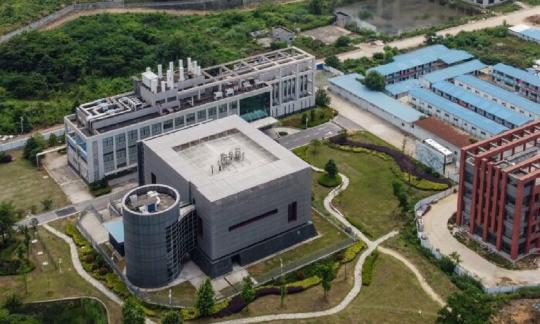
As for the criticism of President Trump by top scientific journals, although it is unfair, it is understandable. The team of Shi Zhengli at the Wuhan Institute of Virology, which is at the center of the storm, is the favorite of Nature magazine. Shi Zhengli’s famous gain of function experiment on coronavirus was published in Nature in 2015. The team modified the bat coronavirus spike protein to obtain the ability of cross-species infection.
There is also some little-known history in the scientific community. As early as 20 years ago, the top international scientific magazines reported stories like this. The successful China-born, America-educated scientists in biological fields in the United States brought high technology back to China. They set up laboratories, and some began to work part-time in China. Those laboratories are the prototype of today’s “shadow laboratories.”
At that time, the CCP did not even have a Thousand Talents plan yet. Scientific magazines were encouraging activities that are considered intellectual property theft today. The scientific community should do more today to dig out the root cause of the COVID-19 pandemic.
Although it is the responsibility of governments, not science, to hold the CCP accountable for the pandemic, scientific journals still have the duty to trace the origin of the pandemic and provide the government with scientific based advice, not new policies. It seems that it is not only politicians who kowtow to the CCP.
Heng He is a commentator on Sound of Hope Radio, China analyst on New Tang Dynasty TV’s program Focus Talk, and writer for The Epoch Times newspaper.
This article was originally published on The Epoch Times.
Views in this article are author’s own and do not necessarily reflect CGS policy.