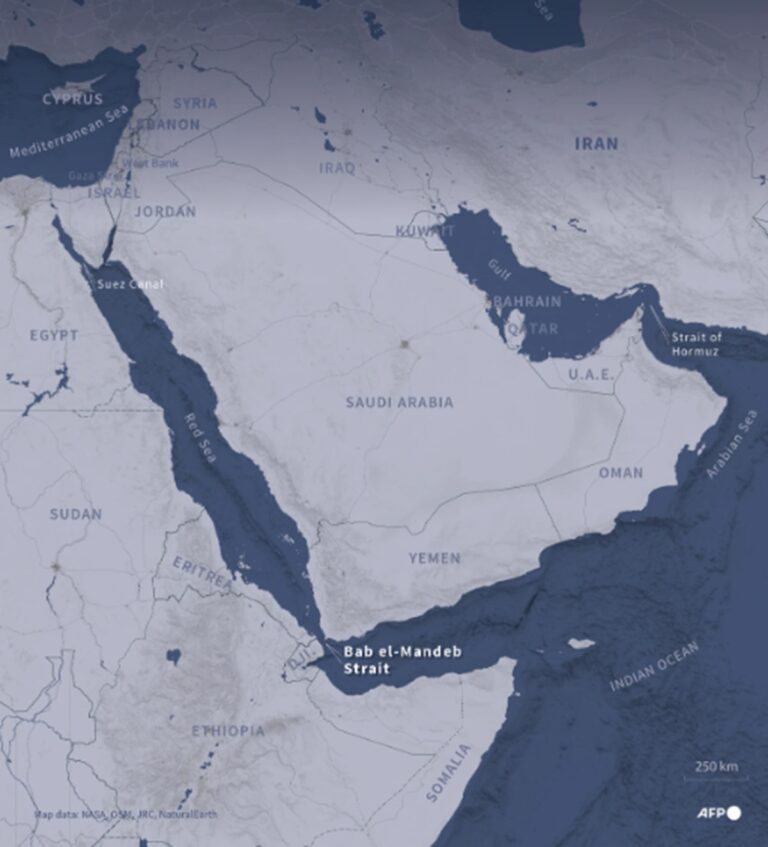
Have a look at a list of the worst-performing currencies since the start of the U.S. and Israeli war with Iran and a striking but unsurprising pattern emerges: They’re almost all energy importers.
The biggest losers include the Egyptian pound, the Philippine peso, the South Korean won and the Thai baht. Among the handful of currencies that have risen, meanwhile, you find the Brazilian real, the Kazakhstani tenge and the Nigerian naira — all significant oil exporters.
That’s a hint of how the next stage of this energy crisis may play out. Just as major oil importers have been running down their reserves of crude since the Strait of Hormuz was closed, so they’ve also been eroding their financial buffers. Governments have cut taxes and lifted subsidies for road fuels to dampen the bill shock from rising crude prices. Foreign exchange reserves, too, are declining rapidly as the price of oil and gas imports goes up without any offsetting increase in the value of exports.
We may be about to hit a critical juncture. In India, the third-largest oil importer, Prime Minister Narendra Modi has called on people to limit their fuel usage, and hiked duties on gold and silver imports to preserve the balance of payments. “It is time for us to use petrol, diesel and gas with great care,” he said on Sunday. “We must make efforts to use only as much as is needed to save foreign currency.”
In Turkey, which depends on imports for more than 70% of its energy consumption, foreign exchange reserves experienced their biggest monthly decline on record in March. Indonesia’s rupiah has weakened below the levels it plumbed during the 1998 Asian financial meltdown. The country is deeply vulnerable to shockwaves from the war in Iran, as my colleague Daniel Moss has written.
The nexus between energy and currencies is one factor that makes this crisis different, economist Philip Verleger noted. In the 1970s, when the U.S. was a net oil importer, the 1973 and 1979 oil shocks raised its own import bills and caused the dollar to weaken. That softened the impact of the emergency on other countries that priced their crude purchases in greenbacks.
This time, the situation is reversed: With America the world’s oil and gas supplier of last resort, the dollar is likely to get stronger, not weaker. If you’re an emerging Asian economy with minimal domestic petroleum reserves, you’re not just paying more for crude. You’re paying more for the dollars you need to buy it, too.
Governments around the world have been far too slow to embrace the potential of clean energy from wind, solar, nuclear, batteries and electric vehicles. The current emergency should be a wake-up call that those technologies aren’t just a necessity for avoiding the long-term ravages of climate change. They’re also the best route out of a fossil-fuel dependency that leaves fragile economies and their currencies hooked on a constant flow of easily-disrupted, volatile commodity imports.
Indonesia, for instance, is struggling with how to make it through 2026 without breaking a law that requires the budget deficit to be no greater than 3% of gross domestic product. And yet some 2.7% of GDP goes on fossil-fuel subsidies, mostly for discounted gasoline and diesel. Thailand expects its debts to rise as the government borrows 150 billion baht ($4.6 billion) to patch up deficits at its Oil Fuel Fund. India’s government-controlled oil retailers are losing 10 billion rupees ($104 million) every day due to selling gasoline, diesel and LPG below cost.
In all of these countries, EVs have been making in-roads thanks to rapidly-improving costs. More than 30% of cars sold in February in Indonesia and Thailand were battery-only. In India, where electric mobility has been slower to take off, sales still jumped 41% in April from a year earlier and electric rickshaws make up 60% of that market.
Chaotic government policy hasn’t always helped those transitions, but the strength of consumer demand for an alternative looks undeniable. In countries that subsidize fuel, as is the case in most of Asia, any further fiscal space should be used to abolish EV import taxes and support purchases and the scrappage of old conventional vehicles. The cost will be a fraction of the far bigger sums that would be spent lowering the cost of years of oil imports. The huge savings in terms of human health and the climate, meanwhile, come for free.
It’s the same situation with LNG, a costly and unreliable source of grid power that’s now being comprehensively undercut by wind, solar and batteries.
In the Middle East, some of the world’s richest economies owe their wealth to the amounts they’ve charged generations of the world’s poorest for ongoing exports of oil and gas. Clean technology is finally smashing that paradigm, allowing people to harvest cheaper energy for decades to come. If emerging countries seize the moment, this could be the last time an energy crisis turns into a currency crisis.
David Fickling is a Bloomberg Opinion columnist covering climate change and energy.
This article was originally published on Japan Times.
Views in this article are author’s own and do not necessarily reflect CGS policy.