Approximately 120,000 Armenian ethnic residents in the Nagorno-Karabakh region live in a state of despair, haunted by the constant fear of ethnic cleansing. While Azerbaijan adamantly denies any intent for such actions following its swift takeover of the region within a mere 24 hours, a recent offensive launched by Azerbaijan on September 19th has rekindled unrest in the area. The humanitarian crisis has now reached its zenith and has persisted for several years, with shortages in fundamental essentials such as food, medicine, and toiletries only exacerbating the crisis over months and years.
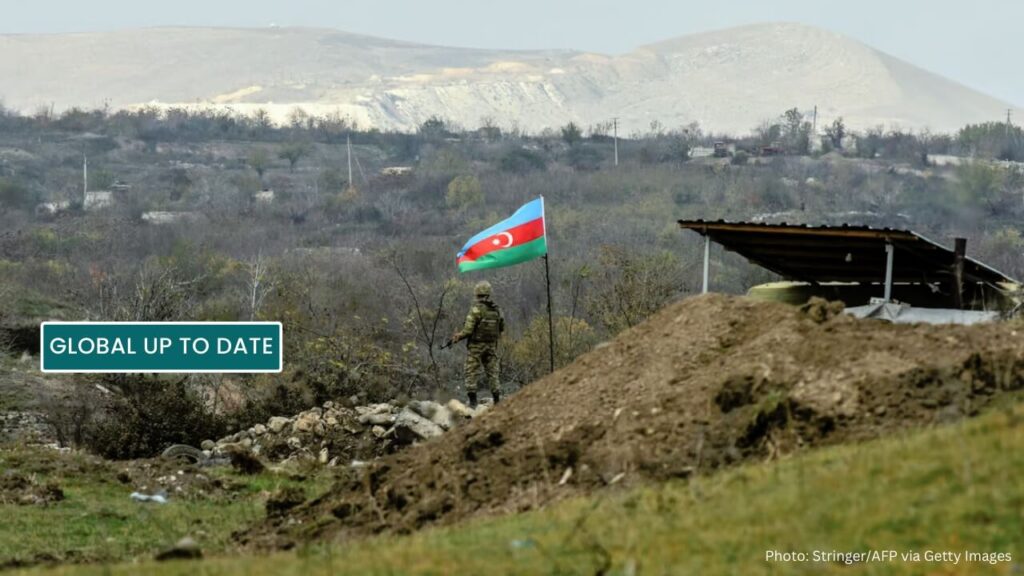
The Lachin corridor, the sole lifeline connecting Artsakh (the Nagorno-Karabakh region) to Armenia and the wider world, has remained under blockade by Azerbaijan since December 12, 2022. The Azerbaijani government has engaged individuals identifying as "eco-activists" to support this blockade for months. These so-called eco-activists encompass civil servants, undercover military personnel, members of pro-government NGOs, and youth organizations. Furthermore, non-Azerbaijani journalists have been barred from crossing checkpoints in this conflict-ridden area.
Commencing on March 26, 2023, the Azerbaijani government escalated its blockade efforts by seizing and securing strategic territory surrounding the Lachin Corridor, both within Artsakh and Armenia. To compound matters, Azerbaijan established a military outpost obstructing a critical alternate dirt road, further deteriorating the already dire situation stemming from the protracted blockade.
The Armenian ethnic populace in the region has long endured recurrent conflicts and actual warfare, tracing back to February 20, 1988, when the first Nagorno-Karabakh war commenced. Professor Stuard Kaufman, an authority in political science and international relations, has asserted that the initial episode of racial violence transpired in October 1987 during a protest against the appointment of a new collective-firm director. This resulted in punitive actions taken against the predominantly Armenian-inhabited village of Chardakhly (now known as Cardaqh). However, Kaufman's assertion lacks solid evidence to corroborate the reported incident. Subsequently, in February 1988, mass violence unfolded a few months later, which was more conspicuous and witnessed by the international community.
The First Nagorno-Karabakh War concluded with the loss of 28,000 to 38,000 lives on both sides, culminating in a ceasefire agreement signed in Bishkek in 1994, with Armenians emerging as victors. Nearly three decades after the inception of the first war, another conflict erupted in late 2020, with Azerbaijan gaining the upper hand. The second Nagorno-Karabakh War tallied thousands of casualties, further escalating the persistent decade-long conflict.
Significant transformations have transpired since then, including shifts in political and power dynamics. Azerbaijan's newfound wealth derived from oil resources bolstered its regional influence and garnered support, primarily from Turkey and, to some extent, the USA. Conversely, Russia's stance on the Nagorno-Karabakh Conflict has evolved over decades, shifting from supporting the Armenians in the initial Nagorno-Karabakh War to adopting a neutral mediation role in recent times.
The decade-long Nagorno-Karabakh conflict poses ominous threats to the residents of Artsakh, with no foreseeable peaceful resolution. The enduring racial conflict between Armenians and Azerbaijanis continues to inflict terror and suffering upon the people of Artsakh. Recurrent attacks, borderland seizures on both sides, and the application of diverse tactics and political maneuvers by each party will inevitably escalate the humanitarian crisis in the region. The question remains: Is there any glimmer of hope amidst this protracted conflict, or is the situation poised to deteriorate even further?
Aong Cha Ching Marma in an Intern at CGS