The challenge is that the sacrifices we have made so far have been worth it.
Juan Notaro
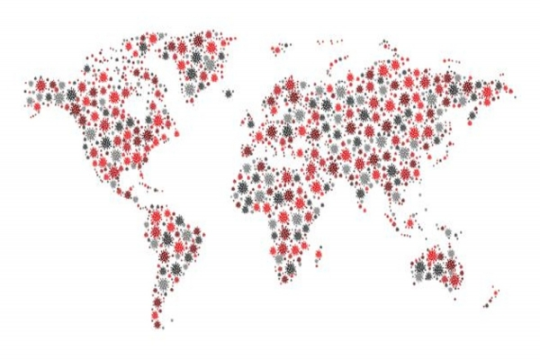
I go through the newspapers in Latin America, and the news of these first days of June paints a gloomy picture. The region has become the global epicenter of the pandemic, and the economic impact, experts anticipate, can last for several years.
The emergency tests the systems to attend to the most immediate and priority: the health of people affected by COVID-19. But it also challenges the ability to care for those affected by the economic consequences of confinement.
On the front of the pandemic, ” very hard weeks are coming ,” the Pan American Health Organization, a regional subsidiary of the WHO, warned a few days ago. The largest countries in the region will see a rise in cases at least until August.
The same can be anticipated on the economic front. The consensus among economists in the region is that the scenario before us augurs a recession of a magnitude still difficult to estimate, but a recession in the end.
In fact, according to the Inter-American Development Bank , some projections estimate that, due to the crisis caused by the coronavirus, “between 5.4 and 18 million jobs may be lost, which would raise the percentage of informal work to 62% of the total of jobs ”.
The public health situation also accentuates historical inequities such as access to drinking water, sanitation, and quality health services. In vulnerable population groups, the health risks are even greater given the difficulties they present in properly observing the rules of confinement and social distancing.
In other words, the problems that we have not been able to solve until now have become more serious, and make the urgency to solve the immediate situation even more urgent, and to seek ways to accelerate solutions to the underlying problems.
The first, and perhaps most obvious, measure of that strategy should be to strengthen health services, so that they provide effective care, that emphasizes prevention, of good quality, that contributes to overcoming the emergency and is efficient in long term.
In this regard, FONPLATA made available to its member countries a special fund for non-reimbursable cooperations , special lines of financing with approval and disbursements in an expedited manner, and the possibility of restructuring some existing credits. Along the same lines, important financing has come from the rest of the Development Banks that operate in the region.
But we can do more. “Development banks are a stable and countercyclical source of financing,” said Alicia Bárcena, Executive Secretary of the Economic Commission for Latin America and the Caribbean, ECLAC , at a recent event .
That the sacrifices we have made so far have been worth it.
In other words, even -and especially- in the most difficult times, the development banks of the region have the capacity to contribute the resources that governments need to adopt the measures to stop this recession with an uncertain forecast that we were talking about before. .
Economic theory indicates that one of the most effective ways to ensure that the debt that governments contract to overcome the recession helps effectively in the economic recovery, is through infrastructure projects.
Infrastructure projects, that is, the construction of roads, bridges, water and sanitation, ports and other major works, build confidence in the recovery, and stimulate the economy by creating direct and indirect jobs.
However, it is not just about banks opening their coffers and handing over the money. The health emergency, and the severity of the recession that is coming, force us to be very efficient with this expense.
Development banks should work with their member countries and financial allies to achieve the injections of additional resources necessary to meet the requests that will come.
In the execution of these funds, the situation requires close work by development banks with governments for transparent management of resources, but above all with the greatest possible impact.
Like the measures outlined in the field of health (dealing with the emergency, but thinking about the long term), the same criteria must prevail in the measures for economic recovery, and specifically, in infrastructure projects.
That is, they are projects that promote economic activity, that contribute to generating employment, that consolidate confidence in the recovery, but that also take into account future needs.
It is not an easy task, but at FONPLATA and at the other development finance institutions, we are working to help in the search for the best solution. And above all, so that the sacrifices we have made so far have been worth it.
Juan Notaro, CEO, Fonplata.
This article was originally published on Huffpost.
Views in this article are author’s own and do not necessarily reflect CGS policy.