It is inevitable to conclude that, in fact, the current cohort of leaders is, with some exceptions, pathetic and worrisome.
Moises Naim
Henry Kissinger thinks that the world will not be the same after the coronavirus. “We are experiencing a change of times,” says the famous diplomat, and then alert us that “the historical challenge for today’s leaders is to manage the crisis while building the future. Their failure in this task can set the world on fire. ”
United Nations Secretary-General António Guterres has said that the relationship between the great powers has never been so dysfunctional as now, adding that the coronavirus “is dramatically revealing that we either unite and work together or we will be defeated by the pandemic.” According to Martin Wolf, the prestigious English columnist: “This is the greatest crisis facing the world since World War II and it is also the most serious economic disaster since the depression of the 1930s. The world has come to this moment when there are huge divisions between the great powers and when the level of incompetence at the highest levels of government is appalling. “
There are many things that we do not know. When will we have a vaccine? What will be the impact of the virus in poor countries where overcrowding is the norm and staying home without working is impossible? What if the covid-19 comes and goes in different waves? But the most worrying question is whether those who govern us will measure up. Martin Wolf concludes: “We do not know the future. But we do know how we should try to shape it. We will make it? That is the question. I am very afraid of the answer. ”
Bad talking about political leaders is normal. It is also critical of his management. But you have to be careful with disdain for governments. The political contest causes the ineptitude and corruption of those who govern us to be exaggerated. Governing, let’s face it, is difficult, and it’s getting harder and harder. Power has become easier to obtain, but also more difficult to use and therefore easier to lose. Sometimes there seems to be no way for a leader to stand up well after running a country. Instead, we frequently see honest and well-meaning leaders whose reputations have been massacred by their critics. And, as we know, in this century political attacks are powered by social networks, bots , trollsand other cyber herbs. It is advisable to be cautious and prudent in criticizing our rulers.
Power has become easier to obtain, and also more difficult to use
I keep all this in mind as I think about the leaders who are in charge of the world today. Despite this caution, however, it is inevitable for me to conclude that the current cohort of leaders is indeed, with a few exceptions, pathetic and troubling.
When the global financial crisis erupted in 2008, he was in charge of the G20 Gordon Brown, the then British Prime Minister. This year it is the turn of the king of Saudi Arabia, who due to his advanced age and poor health delegates the role to his son Mohammed Bin Salmán. Yes, that. The one who ordered the butchering of a journalist who criticized him. This is the leader who must convene, mobilize and coordinate the international community to face the coronavirus and its economic consequences.
In the US, the National Economic Council is the president’s main source of economic ideas and policies. Since its inception in 1993 it has been led by some of the most prestigious American economists. Donald Trump has appointed Lawrence Kudlow, whose best-known credential for the position, to have been a television financial commentator on the board. This is not an isolated case. The Trump administration does not stand out for the ability and experience of its top officials.
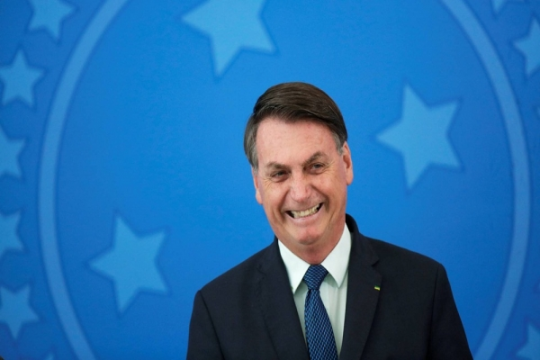
In Europe, the outlook for the confidence that those in power today generate is not very inspiring either. One of the things we need from rulers these days is that they have good judgment. How much assurance about the future do the actions and the judgment that Boris Johnson, Viktor Orbán, Pedro Sánchez, Pablo Iglesias and Luigi Di Maio have exhibited so far give you? In the developing world, Jair Bolsonaro, Andrés Manuel López Obrador and Daniel Ortega are in the news for denying the pandemic; Philippine President Rodrigo Duterte for threatening to kill those who do not respect quarantine, and Narendra Modi for using the virus’s excuse to deepen discrimination against Muslims in India.
I don’t want to romanticize the past, nor suggest that the leaders of the past were always better. There has been everything. We have had Hitler and Churchill, Mao and Mandela. But there is no doubt that this pandemic has surprised the world in moments of great institutional weakness. Crises close many doors, but also open others. This crisis will have many unexpected consequences. Perhaps one of them is a strong reaction against small rulers and the arrival of leaders who are up to the great problems we have.
Moises Naim is a Venezuelan journalist and writer.
The article was originally published on El Pais.
Views in this article are author’s own and do not necessarily reflect CGS policy.