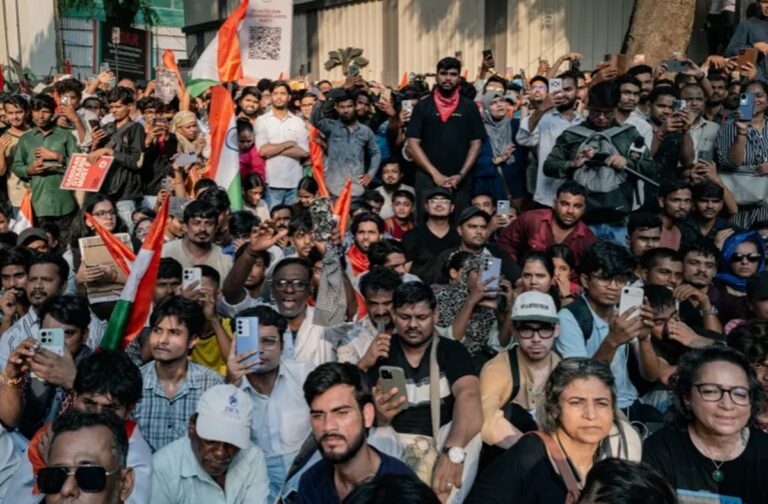
As I talk with different groups of people from various parts of the country these days, the idea that the country requires a drastic change is frequently expressed. People are angry and frustrated and the desire for a different kind of society is palpable. Much of the anger and frustration is directed at the political authority – mainly those in Government, but also the Opposition. Corruption, nepotism, waste and above all the disconnect with the lives of ordinary citizens, which is evident in every statement and action of those in power, is fuelling this anger.
Various political shifts are also visible in response to this public mood. Divisions within Government ranks are now apparent. The Rajapaksa loyalists are dismissing all criticisms as false constructions by their opponents or justify it as Covid induced. They claim that the whole world is experiencing these problems as a result of Covid and that once the pandemic is brought under control, things will return to normal. Yet, as initiative after initiative is bungled and the Government continues to look incompetent, and out of touch, it is clear that the Covid excuse is not going to fly with the public for much longer. Others from the Government have begun to openly critique the leadership and their policies, yet do not want to or are unable to break ranks. Many who critique the Government from within are also dependant on the Government for protection from the law and for their survival. Consequently, the criticism reeks of opportunism and public reactions also suggest that people are unconvinced by this rhetoric.
As anger against the Government grows, there is much jostling for position in Opposition ranks as well. Some see an opportunity to return to power and that this requires mobilising anti-regime sentiments towards a quick change of Government – by hook or by crook. For the National People’s Power (NPP) a mere change of regime is not the answer. We believe, that it is necessary to understand the causal factors that have led us to this crisis and that any solution must take serious account of those factors. For instance, while tackling corruption is a key issue to be addressed and one that is central in the NPP manifesto, it must be understood as inherently linked to the economic policies pursued during the last several years. Similarly, the rise in ethno-religious nationalism, the push back against women’s rights, the rise of fascism, the culture wars, and the ‘post-truth’ society that we live in are not unlinked to the political economy of the last several years. Unless we can offer a different political economic model, we will not be able to pull ourselves out of the abyss in which we find ourselves. This different political economic model needs to founded on a different moral and ethical framework from what exists today. In fact, it calls for a complete reorganisation of the ethical contract between State and society as well as that between citizens. Although an economic policy that focusses on social justice lies at the heart of this, it also involves a very different moral framework through which we can understand and organise ourselves.
Margaret Thatcher, the late British Prime Minister, who played a significant role in ushering in the era of neoliberalism globally, once said in an interview, that “If you change the approach you really are after the heart and soul of the nation. Economics are the method, but the object is to change the heart and soul.” Neoliberal policies were not simply about economic interventions – it involved introducing a different morality and value system to organise our social and political relations. Neoliberal morality and values emphasised materialistic individualism; self-interest over altruism; freeing up the market in the ‘public’ interest; collective interests and organising as a limitation on individual freedom. All this translated into competitiveness as the driving force for transformation of society, deliberate weakening of social protection measures, rampant consumerism and exaggerated notions of personal responsibility. The results are clearly seen today: deepening inequalities, increased vulnerabilities, precarious economies, and the inability to withstand crises either as individuals or as collectives. That the idea of unlimited growth is not sustainable for the planet is also being driven home in no uncertain terms. Therefore, what is required today is not simply a change in our methods or leaders – but a change in our hearts and in our souls. Thatcher was right when she identified that as crucial – although the change she wanted is very different to the change to which we aspire!
It is now abundantly evident, that we are no longer able to find solutions to the problems we face as isolated individuals – or even as isolated nations. We must acknowledge the connections and relationships between us and that the solutions lie in making those connections and relationships stronger, mutually respectful and equitable. This applies to our relationships within our homes, our communities, workplaces and in our local and international interactions. For instance, the climate crisis cannot be solved by individual countries. Emissions in one country affect another; pollution and depleting forest cover in one part of the world has an impact on agriculture and food security in another part of the world. For businesses and entrepreneurs to thrive, we need to recognise that being socially responsible and concerned about matters of equity, the environment and social justice is necessary. We need to ensure that our health and education systems are strong, stable and secure if we are to improve our children’s lives. As citizens we need to be able to participate in the decision making process and hold our elected representatives accountable and not limit our civic role to simply voting at an election. This idea of building on our connections, and therefore foregrounding the idea of collective responsibility and shared interests is what neoliberalism attacked: this was the ‘heart and soul of the nation’ that Thatcher set out to change.
Of course, there are sections who benefited from this change. Globally and locally, there is a political and economic elite for whom this worked. Even in the midst of crises, they thrive. For them, the idea of change and transformation is completely unacceptable. So, the response to a different model is completely predictable – one that dismisses the possibility of transformation or the idea that change is something scary and dangerous. We can see this in recent portrayals of the National People’s Power (NPP) by its opponents. Attention is drawn to the past record of the Janatha Vimukthi Peramuna (JVP) and dire warnings of its potential for violence is constantly raised. Never mind, the fact that the JVP has been at the forefront of every effort, since 1994, to advance democracy in this country: whether constitutionally (17th Amendment, 19th Amendment and its resistance to the Constitutional Coup are a few examples) or on the streets. The JVP intervened in these instances, even though it meant that it supported the cause of reactionary regimes – because of their principled defence of democratic values. Such attacks also ignore that successive regimes in this country have turned their guns on the people of this country – causing Sri Lanka to be internationally censured for human rights violations – JVP has been at the receiving end of the State’s repression on more than one occasion. Another tactic is to patronisingly question the capacity and experience of the JVP and the NPP to deliver – “they are good enough to be in Parliament (maybe get even a few more seats than they do now) but are they really good enough to govern the country?” ignoring the blatant incompetence of those who have governed us for the last several decades. Finally, dire warnings of what happened in Soviet gulags, Mao’s Cultural Revolution etc. are invoked as what to expect under a NPP Government.
The NPP has signalled on many occasions that it is ready to engage in constructive criticism of its policies, approaches and strategies and is in fact doing so. The JVP, the main constituent member of the NPP has on many occasions discussed its past actions and their commitment to democracy and the Parliamentary system. Yet, we also recognise signs of what in traditional progressive political circles is referred to as the ‘counter-revolution’. There will always be a section of the population – usually the elite – who want to maintain the status quo. They will exploit the natural tendency of many who fear change to create uncertainty about transformational politics. These regressive forces will also seek to reinvent themselves as representing the ‘change’ while engaging in cosmetic changes of name, symbols, policies and leaders. They will also unleash every weapon in their power against those who represent the transformation that challenges the status-quo. This counter revolution is only to be expected – but for those of us who seek meaningful transformation, our hope lies in the power of the people. The more people become aware of and understand the reasons for their problems, when they are able to channel their frustration about their condition, towards organising themselves for change, no power on earth – however corrupt and violent, will be able to stop them. We can see these changes among the people we meet on a daily basis. This is truly a moment when the heart and soul of our nation is at stake.
Harini Amarasuriya is a Sri Lankan academic, rights activist, university lecturer and politician who also served as a senior lecturer at the Department of Social Studies of the Open University of Sri Lanka. She currently represents the National People's Power party since 2019.
This article was originally published on Ceylon Today.
Views in this article are author’s own and do not necessarily reflect CGS policy.